teachertraveler.com

This website does not represent the opinions of Peace Corps or The United States of America


Living a life somewhere between Lonely Planet, Education Weekly and the Penthouse Forum...


Ukraine: Done

Wednesday, November 29, 2006

Wow.

Like everything in my life it was at the last second: I was supposed to check-out today but a series of events meant I got to Kyiv with only 90 minutes before the office closed and I was in need of a medical checkout, needed to close my grant (which normally takes a couple hours) and still needed half a dozen signatures from people who weren't in their offices.

And with quite a bit of help and good-will and at least one very annoyed financial manager (along with running up and down three flights of steps about nine times)...it's done. I'm done.

I am no longer a Peace Corps Volunteer.

I thought it would be more sad but the elation of getting the paperwork in under the buzzer and finally finishing everything put me on an adrenaline high.

Wow.

Done.

I fly home in five days.

Ukraine: Why I Almost Quit Peace Corps

Thursday, November 23, 2006

Why I almost quit Peace Corps 12 days before finishing it:

Well, before we get to that I want to talk about my language proficiency test, which was one of many tests (medical being the rest), exams, surveys and interviews that comprise the two page typed checklist that must be completed before I can close my service. It’s almost as hard to get out of Peace Corps as into it.

I thought my language test would be in the afternoon and toyed with the idea of drinking a “longehr” (a pre-mixed vodka and juice drink sold on any street corner in Kyiv) in order to grease the grammar. I have had it independently confirmed that my Russian is quite a bit better under the influence of alcohol, if only because I stop worrying about making mistakes, something which no doubt causes me to make more of them. Unfortunately, my test was scheduled for 10:00 AM and despite the Ukrainian belief that 100 grams of alcohol every morning is healthy for you, even after two-plus years of living here I still can’t stomach the idea of vodka for breakfast. So I went and did it sober.

I was hoping—only hoping mind you--for a score of Advanced-Low. In reality, though, I thought I would receive an Intermediate-High. I had thought I was at this level during the last test I took in January, but only received an Intermediate-Mid. Now, while I have grown more comfortable with the language over the past ten months or so, I haven’t felt like it went up drastically. In fact, I thought the high point was around August when I was dating a girl who didn’t speak English and most of my Ukrainian friends found it was easier to speak with me Russian than mash their way through English. But after Sarah came to Ukraine I found myself speaking English for pretty much a month because I spent most of my time with her and even when we did hang out with Ukrainians, we kept it to English so she didn’t feel excluded. Sarah’s month long visit put my work into a backlog and I was swamped with catching up, leaving little time for socialization. The result? I felt like my Russian died and was having dirt thrown onto it. So I was hoping for Advanced-Low but would be satisfied with Intermediate-High, secretly worrying that I was still at Intermediate-Mid.

The test was simply sitting down with a Ukrainian staff member and having a conversation. Thirty minutes of describing my projects and saying where I thought Peace Corps should go in Ukraine later, I was given a score Advanced-Mid, higher than I had ever hoped for. Hammer out the grammar problems, I was told, and it would have been Advanced-High.

Made my day.

And I didn’t even need the vodka.

***

My day took a slight turn for the worse in the afternoon. Admin was confused because I kept telling them I was flying out on December 4th but the computers showed me COSing (Closing of Service) on December 14th. Why? Well that’s the official COS date. And while we’re allowed to leave up to 30 days early, apparently there was a form to fill out for that.

“Can I fill out this form now?”

“No, it was due in October. You can’t leave until the 14th.”

“But I bought a non-refundable plane ticket for the 4th.”

“Sorry.”

“I’ll talk to Diana (Peace Corps Ukraine Director) about that.”

“The person to talk about that is [Bob]. But he won’t approve it.”

NOTE: Bob is a Ukrainian guy, but I’m keeping his identity secret.

I go up to Bob’s office and ask his secretary if he is in.

“No, he’s out to lunch. What do you need?”

I show her the form and say I need it approved.

“He won’t approve that. It was due in October.”

“But I need to leave on the 4th.”

“You can’t.”

On the way out of the office, another admin worker that I'm friends with expresses shock and dismay when hearing about not filling out the form. According to her, there is no way to get it approved now.

Dammit.

I go up to the office of the director and talk to her secretary, but the director is busy. She says she can squeeze me in for five minutes in an hour.

I go down to the volunteer lounge and fume a bit. It is my fault. I vaguely remember being told about the form when being handed the inch-thick stack of forms that needed to be completed before I could leave Peace Corps, but, yeah, I never filled it out.

Three Peace Corps employees have told me there is no hope of getting it approved and seem to think Bob will scream at me for even asking. But they’re Ukrainian and Ukrainians ultimately think differently. Bribery may be part of their culture, but getting approved past a due date is not. Americans, on the other hand, bend rules if the rules need bending. I hold out hope for the director.

Still… If she can’t help me, my only option is to quit. The consequences? None, really. After a year in Peace Corps you get all the benefits you get if you stay the full service, save one: non-competitive eligibility for government jobs. Except that benefit only lasts a year from service and I don’t see myself trying to get a government job any time soon, if ever. So if I quit, on my paperwork it says “Early Termination” rather than “Close of Service” and that’s it…but it does mean I quit 12 days before I was supposed to finish.

At the time of my appointment I explain the problem to the director, admit it’s my fault and say I need a favor. She winks at me and says “let’s do it.” As she’s signing the form, she says “Bob’s going to kill me.”

I take it down to my manager. He looks surprised the director signed it but signs on his line. “Bob’s going to be pissed.”

I take it up to Bob. I hand him the paper. He nods and signs it.

“You’re not upset?” I ask.

“Why would I be?” he asks. “The director signed it, so I don’t care.”

I leave the office and go back to the admin person handling my paperwork and tell her my COS date has been officially moved up. She doesn’t believe me, and actually calls Bob for confirmation. She hangs up the phone looking surprised.

Later I see my manager. “Bob didn’t yell at you?” he asks.

“Nope,” I said. “He didn’t care.”

My manager gets a far-away look in his eyes. “Well I guess you never know,” he says.

My official COS date is now November 29.

In six days I will no longer be in Peace Corps.

Ukraine: Description of Service

Tuesday, November 14, 2006

Had my last day of teaching today. Felt good, actually. Also went and bought my first suit 'cause I know I need one and it's cheaper here. Everything's like that now: finishing this, getting that, all preparing to leave. And that includes writing my Description of Service.

What is it? It's the official record of everything we've done. Like a few other volunteers in my group, I've decided to post mine online. Why? To brag of course!

It's just the way such things are. A lot of it is boiler plate: they gave us the exact wording on most of the beginning and end and gave us examples of how the middle should go. Workin' for the government and all.

Thought I'd share.

***


Description of Peace Corps Volunteer Service
Name: Daniel Reynolds
Country of Service: Ukraine
Dates of Service: (December 2004 – December 2006)

After a competitive application process emphasizing professional skills, cultural sensitivity, adaptability and medical fitness, Daniel Reynolds was invited into Peace Corps service as a Teacher Trainer.

On September 29th, 2004, Daniel Reynolds joined the twenty-seventh group of Peace Corps Volunteers to serve in Ukraine. He entered an intensive 12-week Peace Corps Ukraine community-based training program. The training program included 150 hours of technical instruction in TEFL methodologies and teaching practice, 200 hours of Ukrainian language training, and 100 hours of cross-cultural studies (history, economy, cultural norms, etc.). To reinforce language and cross-cultural learning, Daniel Reynolds lived with a Ukrainian family in the town of Obhiev, Kyiv Region throughout training.

In preparation for his Peace Corps service, Daniel Reynolds, while a trainee, taught at Public School #11. While at Public School #11, Daniel Reynolds taught English and Country Studies. As a teacher trainer, he also helped the four other trainees in his cluster plan their and observed their teaching to provide feedback.

U.S. Ambassador John Herbst swore in Daniel Reynolds as a Peace Corps Volunteer on December 23rd, 2004 in Kyiv, Ukraine.

Daniel Reynolds was assigned to Zhytomyr, a city of 300,000 in west-central Ukraine. He worked as a full-time instructor at the Zhytomyrska Oblast Recertification Institute which trains and recertifies 200 teachers a year. He was one of two TEFL Pedagogy teachers and reported directly to the institute’s director Ivan Ivanovich Yakuno, while working closely with his counterpart Irina Borislavina Gumenyuk, the Head of the Foreign Languages Department.

Teacher were recertified at the institute every five years in groups of 25-30, each attending month-long courses. Daniel Reynolds taught more than 300 teachers over his two year service, personally training 40% of the English teachers in the Zhytomyrska Oblast. He taught the following 90-minute seminars:


•Introduction and Terminology of the Recertification Course
•Approaches to Language Teaching
•The Communicative Method
•Teaching Speaking Skills
•Teaching Listening Skills
•Teaching Reading Skills
•Teaching Writing Skills
•Teaching Integrated Skills
•Teaching Vocabulary
•Teaching Grammar
•Teaching Mixed-Ability Classrooms
•Lesson Planning
•Classroom Instruction/Management
•Teaching Young Learners (five different seminars)
•Language Improvement (four different seminars)
•Country Studies (four different seminars)


Daniel Reynolds also developed and taught an advanced English language program for secondary students. His lessons fostered critical, creative thinking through interactive learning. This program prepared students for Ukraine’s highly competitive English competitions (Olympiads). All his students qualified in their regional Olympiads and went on to compete at the oblast level. At the oblast level, one of his students took first place and two took second place in their respective divisions and all three went on to compete nationally.

Daniel Reynolds developed, with Irina Borislavina Gumenyuk, all the tasks used in the Zhytomyrska Oblast English Olympiads for 2005 and 2006. This involved writing numerous writing and speaking prompts, as well as creating multiple-choice and true/false reading and listening tasks for three different grade levels. He also judged at the Zhytomyrska Oblast Spanish Olympiad in 2005 and at the Zhytomyrska Oblast English Olympiads in 2005 and 2006 (in order to prevent a conflict of interest, he did not judge the grade level of the students he was coaching). When the Ukrainian National English Olympiads took place in Zhytomyr in 2006, Daniel Reynolds helped coordinate the ten Peace Corps volunteers who came to Zhytomyr to judge at them.

Daniel Reynolds developed a large body of original teaching materials during his service. These included: a twelve lesson integrated skills English Competition training course that included audiovisual materials and used authentic materials; a five lesson Country Studies course on America, each lesson including authentic materials, digital photographs, texts with questions, listening exercises using audio from native speakers and short videos (many filmed and edited by Daniel Reynolds himself); a 40-page booklet, written in conjunction with Irina Borislavina Gumenyuk, on Olympiad training, which was sold by the institute to teachers in the oblast; and a twelve lesson update of the British Councils Recertification Curriculum. All these materials were distributed by the institute, by Peace Corps and by Daniel Reynolds to Ukrainian teachers and Peace Corps Volunteers for use in their classrooms. The update of the British Councils Recertification Curriculum was distributed to all the teacher trainers in Ukraine Group 31.

To increase awareness of the communicative method and show its applicability in the classroom, Daniel Reynolds taught a number of “master lessons” at various schools in the Zhytomyrska oblast. He would visit a classroom (often in a town or village) and teach a TEFL lesson to a classroom of students. These lessons would be observed by the school’s English teachers so that they could learn how communicative teaching techniques could be used in a real-life classroom setting.

These were Daniel Reynolds primary assignments.

In addition to his primary responsibilities, Daniel Reynolds worked to increase the level of English in his community by hosting a 90 minute English Club at School #12 once a week (average attendance of 20 students); teaching “guest classes” at the Zhytomyr Pedagogical University; substituting on numerous occasions for sick teachers at School #12; and hosting a weekly English movie club at the Zhytomyr library. The movie club proved to be especially popular and was sometimes standing room only. The participants came from all walks of life, including retirees, teachers, and university students, and the club became so well-known in the community that it was covered twice by a local newspaper.

Daniel Reynolds served as the oblast manager of the Peace Corps “Practical Project”, a project aimed at increasing the English and pedagogy levels of English teachers in select oblasts in Ukraine. Daniel Reynolds was responsible for the coordination and oversight of ten TEFL Peace Corps Volunteers in his oblast, who in turn conducted monthly or bi-monthly workshops with teachers in their communities. He conducted monthly meetings with the volunteers, distributed teaching materials to them and observed them teaching in their classrooms once a semester to provide feedback on their teaching. Through this project, dozens of young teachers in the oblast saw dramatic improvements in their ability to speak English, improvements which would no doubt carry over into their classrooms.

Interested in both youth sporting and wanting to combat the alarming increase in HIV infection in Ukraine (during Daniel Reynolds’ service, Ukraine had the fastest growing HIV infection rate in the world), Daniel Reynolds, working with a sporting-NGO called Polissya, applied for and was awarded two Small Project Assistance Grants for a total amount of $8,262.

The first SPA grant, for $3,342, was to complete and purchase equipment for a 25-foot high climbing wall. After completion, 93 students were trained in basic climbing techniques on this wall. To be able to climb, the students had to attend a one hour seminar on HIV/AIDS provided by the Ukrainian branch of ACET (AIDS Care Education Training), an international HIV-awareness organization. These students were then allowed to climb for free on the wall on nights and weekends. The wall became fairly well-known. Its opening was covered in two newspapers and it was later visited by Country Director Karl Beck, Country Director Diana Schmidt, two regional managers, SPA project coordinator Anne Silver and Peace Corps Deputy Director Jodi Mitchell.

The second grant SPA grant, also with Polissya and for $4,920, purchased ten bikes and materials to mark bike trails in the Zhytomyr region. A 25-kilometer bike trail was marked with signs in the wooded area south of Zhytomyr and Polissya began conducting biking excursions in the oblast. Orphans were the target group of this project because they were statistically more at risk of being involved in crime and the sex industry. In order to ride the bikes, the 74 orphans who participated in the project had to also attend an HIV/AIDS seminar provided by ACET. Both projects are continuing and Polissya plans to offer bike excursions to local students beginning in spring 2007.

Daniel Reynolds continued to work with Polissya, helping to promote their projects. He brought them business from a Zhytomyr-based Dutch computer company, got them listed in Brandt’s Rough Guide, got them featured on a television show focused on successful Ukrainian organizations, and got donations for them of new climbing ropes from New England Ropes, space heaters from COSing volunteers, and a two year subscription from Rock + Ice.

During the summers, Daniel Reynolds continued his work in increasing student interest in sporting, American culture and the English language. In 2005, with 11 other Peace Corps Volunteers, he participated in a summer camp organized by the Sevastopol Recertification Institute, which helped more than 30 students practice their English skills and learn about American culture and civil rights. Also in 2005, Daniel Reynolds was invited to be a master teacher for the staff of YouthCAN, which ran an extremely popular civic education youth camp called Rah-Rah. He conducted a marathon four-hour pedagogy session for YouthCAN’s trainers so that they could better teach the participants of their camp. Later in 2005, Daniel Reynolds was trained by American Councils to teach at their Pre-Departure Orientations (PDO) for Ukrainian students who would be going to America for nine months on the FLEX exchange program. During two four-day sessions he trained 30 students using a Department of State-approved 12-lesson curriculum. In 2006, Daniel Reynolds was invited back by American Councils to be the Master Teacher at their Training of Trainers. He taught teaching skills to 40 trainers from six countries and then observed and gave feedback for their mock-trainings during the four-day session. That summer, Daniel Reynolds taught another 15 FLEX students during a four-day PDO. Later in the summer, he taught 100 teachers about American schools at a week-long “teacher camp” hosted by the Zhytomyr pedagogical university.

In 2006, as the result of five months of planning, 20 students participated in Camp Edelweiss, a climbing/teamwork/healthy lifestyles summer camp that pulled together resources from Polissya, ACET, Peace Corps, American Councils, The Center for Youth Initiatives and donations from both businesses in Zhytomyr and international ones such as Mammut, Black Diamond and Metolius. Daniel Reynolds managed a staff of twelve during the five-day camp, including four Peace Corps Volunteers. At the camp, teams of students climbed Zhytomyr’s cliffs, competed and cooperated while completing team challenges like crossing a river with a rope or navigating obstacle courses, and participated in seminars that covered HIV/AIDS, narcotics, alcohol abuse, civic responsibility and more. Due to the sponsorship, every participant at the free summer camp received tee-shirts, completion certificates, posters and stickers. In order to not limit participants, the camp was conducted entirely in Russian and Ukrainian. Daniel Reynolds worked closely with the local media and the camp was covered by three newspapers, a radio station and a television station. The Ukrainian staff participants also reported that they gained a great deal of project management and public relations knowledge from working at the camp. One staff member said putting the camp on her resume and talking about the experience during her interview was likely what awarded her a placement in the UGRAD exchange program. Now in the program, she is currently studying at St. Lawrence in Canton, New York.

Continuing his interest in sporting and HIV education, Daniel Reynolds was one of two project managers on Run Across Ukraine, a relay race from the Eastern border of Ukraine to the western one to raise awareness about HIV/AIDS. Along with PCV Jon Kendrick, Daniel Reynolds helped organize and grow the run; brought on board other PCVs and organizations (including ACET, American Councils, the All-Ukrainian Network of People Living With HIV/AIDS, Democrats Abroad and the U.S. Embassy); secured the donation of advertising, tents, bikes, a PA system and thousands of HIV information pamphlets; designed a webpage and got the web address http://www.runacrossukraine.org and webmaster services donated; and contracted for a bus that would support the runners on their journey. Although scheduled for September 2006, issues with securing permission for the run from the Ministry of Family, Youth and Sport (who were in turn plagued by constant political upheaval and uncertainty) delayed the run past the Close of Service date of both Jon Kendrick and Daniel Reynolds. Both volunteers transferred their responsibilities to two new, enthusiastic volunteers, introduced them to the leaders of the organizations supporting the run and helped prepare the new team of PCVs who would organize it. Daniel Reynolds hopes to return to Ukraine to help manage the run when it will begin in May 2007.

Near the end of his service, Daniel Reynolds became increasingly interested in working with civic education groups. He helped The Center for Youth Initiatives write their Democracy Grant for “Active Community, Transparent Authorities”, which sought to empower Zhytomyr NGOs by providing them with resources and workshops and to open the avenues of communication between Zhytomyr NGOs and the Zhytomyr Government (which was also going through upheavals, including the recall of the mayor due to election fraud). Daniel Reynolds also advised and did translation work for several grants pursued by the Ukrainian branch of the International Organization for Human Rights, an NGO that conducts human rights monitoring in Ukraine (particularly in prisons) and conducts civic education, leadership and conflict resolution seminars with Zhytomyr’s students. Daniel Reynolds advised on and translated a Democracy Grant for Commercial and Information Center, an NGO which wants to air regular three-minute spots on local television to inform the citizenry of their legal rights. Ukrainians would be able to SMS, call or email the center to ask legal questions which would be answered in the next television spot. These spots would also provide information to help citizens protect themselves against police extortion and human trafficking, both serious problems in Ukraine.

As Daniel Reynolds’ Russian abilities improved, he was able to offer volunteer translation services, including helping one teacher with her master’s thesis; translating a press release for Soldiers for Peace, an NGO of retired soldiers that do community work; and translating the menu for the Corsair restaurant so that they could attract more foreign business.

Daniel Reynolds continued to initiate projects even as he was leaving. With less than three weeks before his COS date, Daniel Reynolds took a group of Ukrainian university students to the orphanage with which he had worked on the Bike Project. Seeing that the orphans needed more attention and interaction from adults (a staff of 8 took full-time care of more than 100 orphans), the group, with Daniel Reynolds advising and organizing, decided to create a social club that would visit the orphanage weekly to interact with the orphans, bringing them movies, music and conversation.

Daniel Reynolds was extremely mindful of his short stay in Ukraine and actively worked to make sure his projects were sustainable after he left. For each major project he groomed a Ukrainian or American replacement and made sure he/she had an active part in the planning process. Due to this, the Climbing Wall; the Bike Project; Camp Edelweiss; the Movie Club; Run Across Ukraine; Active Community, Transparent Authorities; the Orphanage Project and the Legal Rights project will all continue after he goes back to America.

Besides his work with host country nationals, Daniel Reynolds was an active volunteer in different Peace Corps projects. In addition to teaching at several in-service trainings, Daniel Reynolds was a member of the Multicultural Awareness Group. With the group, Daniel Reynolds helped to put together a series of lesson plans that taught cultural sensitivity and helped to create a multicultural awareness video. Channeling his former career as a journalist, Daniel Reynolds was also an active contributor to Peace Corps Ukraine’s newsletter, Nu Scho?!, with an article in all but one of the monthly newsletters printed during his service. Daniel Reynolds’ writing also led him to work with Peace Corps Ukraine’s public relations department, writing several articles for them on projects he and other volunteers had done.

Although he was taught Ukrainian during training, Daniel Reynolds was assigned to a Russian-speaking site and so began studying Russian in his spare time. At the end of training, Daniel Reynolds tested in Ukrainian and received a score of Intermediate-Mid on the Language Proficiency Inventory. At the end of his service, Daniel Reynolds tested in Russian and received a score of Advanced-Low on the Language Proficiency Inventory.

Following 750 years as a colony of other Eastern and Central European states, Ukraine decided in 1990 by plebiscite to be an independent country oriented towards Western Europe. Ukraine welcomes change and encourages its people to open their minds to new concepts. Daniel Reynolds’ work as a teacher of English language, as well as his role as a transmitter of western culture and its approaches to problem solving, were part of a nation-wide effort in Ukraine to reorient itself towards the West.

Additionally, Daniel Reynolds fulfilled the goals of Peace Corps service by giving of himself, both professionally and personally, to his site and the local community. His contribution, whether to the teachers of his institute, to the pupils of the local schools or to the members of the local community, provided opportunities for Ukrainians and Americans to create common bonds and to gain understanding and appreciation for one another.

Pursuant to Section 5(f) of the Peace Corps Act, 22 USC 2504(f), as amended, any former Volunteer employed by the United States Government following her/his Peace Corps Volunteer Service is entitled to have any period of satisfactory Peace Corps service credited for purposes of retirement, seniority, reduction in force, leave, and other privileges based on length of Government service. That service shall not be credited toward completion of the probationary or trial period of any service requirement for career appointment.

This is to certify in accordance with Executive Order 11103 of April 10, 1963, that Daniel Reynolds served successfully as a Peace Corps Volunteer. Her/his service ended on November 18, 2006. He is therefore eligible to be appointed as a career-conditional employee in the competitive civil service on a non-competitive basis. This benefit under the Executive Order extends for a period of one year after termination of Volunteer service, except that the employing agency may extend the period for up to three years for a former Volunteer who enters military service, pursues studies at a recognized institution of higher learning, or engages in other activities that, in the view of the appointing agency, warrant extension of the period.

Ukraine: Extreme Marathon 2006 (Pics)

Monday, November 13, 2006

A guy rode past me on his bike, popped up his front wheel, hit the brakes and stopped like that, balanced on his back tire. Then he started jumping up and down, using his bike like a pogo stick, the back tire thumping as it repeatedly hit the ground.

I thought: Q: Who the hell are these guys? A: People who think mountain-biking, rocking climbing, orienteering, paint ball, and carrying said mountain bike over countless streams, footbridges, embankments and outcroppings, all in sub-zero weather, is fun.

It was 9:00 AM and I was waiting, along with 19 other people, to compete in Zhytomyr’s Extreme Marathon, a multi-sport adventure race. This was actually only a mini-Extreme Marathon. The real one, in which I had competed the year before, was a 24 hour endurance race of running, swimming, climbing, ropes course challenges, orienteering, biking and rafting. Carrie (another volunteer) and I had lasted about 12 hours before dropping out. That had been the plan all along, because I had to be in Kyiv the following day and couldn’t afford to do the all-night trekking through the woods (which hadn’t sounded like a lot of fun anyway). Still, of the 32 teams from 6 countries, four others dropped out before us, which meant we weren’t complete losers.

Although Extreme Marathon was born in Zhytomyr, its increasing popularity and the addition of real corporate sponsorship (from Marmot, among others), meant a much larger Extreme Marathon took place this summer in the Chernitskava Oblast. Jon and I briefly considered entering, took one look at the gear list and the hassle involved of getting it all to another oblast and, with Run Across Ukraine taking up most of our energy, decided it wasn’t worth it.

So I was excited when I heard there would be a smaller version in Zhytomyr this year. Of course, I only heard about it 36 hours before the race itself. Jon couldn’t leave his town because it was his last weekend in Ukraine, so I asked my neighbor and 15 year-old climbing protégé, Igor, to be my partner. He accepted, and then told me he’d only ridden a bike once in his life and that, because of him, we’d probably loose.

“I’m not doing it to win,” I said to him. “I just want to finish.” I considered that for a moment, and remembered the last race and the pride of not being the first team to drop out. “And not come in last place,” I said.

It turns out, largely through my own mistakes, that while we did (sort of) finish, we also came in absolutely, dead-last place.

Here is a record of those mistakes.

***

Igor has an earnest can-do attitude, which is what makes him such a great student whether he’s in class or on cliffs (and I’ve had the pleasure of teaching him both places). As soon as he accepted my invitation to compete, he asked to borrow a bike to learn how to ride it. Giving him one, off he went, practicing for the next four hours, not wanting me to help him. When he returned it that evening, he asked to borrow it at 7:00 AM the next morning to practice some more. I woke up just long enough to give it to him before going back to sleep, trying to get in another hour before having to leave for the race. Unlike his lazy American partner, Igor was up with the sun, trying to teach himself to ride.

The race started near Zhytomyr’s only extreme sports store, a tiny, ten square-foot space crammed with skis, sleeping bags and backpacks. There wasn’t even room for a register or sales desk, and the salesperson sat in a chair between two aisles. If you want things like climbing gear, they pull out the catalogue and ask what you want ordered.

Photobucket - Video and Image Hosting
Teams arriving at the start point

In the parking lot, the ten teams were registering at the organizer’s table, which was actually the hood of a car. Once signed in and having paid 10 hrivna ($2) per team, we were given cards to go around our necks. These cards would be hole-punched and scrawled on at 18 checkpoints in and around Zhytomyr. On our card was written the team name Carrie and I had chosen last year: Bolshevilne Yeedjike, or “Crazy Hedgehogs”.

Photobucket - Video and Image Hosting
The registration table

Photobucket - Video and Image Hosting
Me, with our "Crazy Hedgehogs" card

I was already loosing the feeling in my fingers and toes from standing around in the cold when, finally, we were told to line up our bikes. Igor’s and mine were from the ten that were purchased by the forward-thinking tax payers of America for Zhytomyr’s youth. As part of keeping the project sustainable, Polissya was allowed to rent these bikes out in order to earn funds to keep the bikes maintained. Another four of the ten bikes were being ridden by race participants. I hoped they’d paid to use them.

Photobucket - Video and Image Hosting
Igor and I, before the race

The race participants were hard core, the best of Zhytomyr’s extreme community. Almost all were Polissya members, who climbed in the winter long after I had deemed it too cold to do so, who had started adventure racing in Ukraine and who now traveled all over the country and the CIS region to compete in them. Even the bike-renters were adventure racers who normally took part in races that substituted long-distance hiking for biking. Still, I didn’t think of myself as particularly outmatched. True, I’d ridden a bike about ten times in the past ten years, but I was one of the best climbers in the group. It didn’t really occur to me that climbing would be about 0.02% of the race and the rest would mean using muscles I never really used before, that I would be competing in an endurance race when I spent most of my time sitting inside.

It didn’t really occur to me how spectacularly I was going to get my ass kicked.

Photobucket - Video and Image Hosting
All the teams lined up

We were handed a typed set of clues in Russian (“the hole puncher is inside an old well”, for example) and a map, which had the 18 checkpoints marked on them and the order they were to be done in.

On your mark, get set …

And we were off.

***

As a mob of 20 bikers, we made our way to the first checkpoint, which, once off Zhytomyr’s streets, meant navigating down a steep, hill-hugging, winding, muddy path. In the spirit of racing, I did not walk my bike down (two teams choose to do so), but blithely followed the psychopathic people ahead of me, waiting to fly off the path and die at any moment.

After braking to a dirt-spewing halt, we hopped off our bikes to gather around an old stone well, reaching down to punch our cards with a hole puncher tied to the inside. A code (B7) was spray painted on the side of the well, and this was then written by us on our cards next to the punched holes (each puncher left a different configuration).

And then it was off to the next checkpoint.

Except Igor’s bike chain had come off. And not just come off, but had inexplicably come over the gear wheel and was now around the pedal, jammed in against the gear shift. I hurriedly worked it back into place as seven teams disappeared off into the woods.

The chain now on, Igor and I crossed a wooden footbridge and furiously biked off after the other teams. On top of a hill, we couldn’t see them, so I reached for the map.

My hand felt cloth.

There was no map.

After the first checkpoint, I had shoved it in my left jacket pocket.

It was not there.

My pumping legs must have knocked it out.

Fuck.

Leaving Igor at the top of the hill, I went back the way we came, looking for the map. The other two teams, the ones that had walked their bikes down the hill, passed me. I went twice along the distance between the hill and the first checkpoint and could not find the map. Possibly someone had picked it up; there were Ukrainians walking along the paths we were riding on. Possibly one of the two trailing teams had grabbed it, but that was unlikely. Ukrainians are remarkably sportsmanly. It had occurred to me to stop one of the trailing teams and ask them to share one of their maps, but I knew that they would say yes and that it would be unfair to impose ourselves on someone for the entire race.

In the end, Igor and I went back to the starting point and got another map.

That was Daniel mistake #1.

***

New map in hand (firmly clutched in hand), it occurred to me to skip the next checkpoint and catch up with everyone (there’s a 30 minute penalty for each missed point), but I wanted to do the whole race. If I was going to loose, I was going to at least complete it.

Half an hour later we were lost in the woods. There was a circle on the map on a green bit and there was a clue for a “half ruined tree”, but after a lot of circling, we couldn’t find that tree. Found a lot of live ones and a few dead ones, but no “half-ruined" ones that would have a hole puncher and a code. The forest was a maze of crisscrossing paths and while I could always get us back to civilization, I didn’t always know where we were in relation to that circle.

My mobile rang.

“How’s the race?” asked Jon.

“Igor’s bike chain came off, I couldn’t find our map and now we’re lost in the woods.”

“Huh,” said Jon, helpfully.

“And we haven’t even reached the second checkpoint.”

“Yeah, sounds like you’re doing well,” said Jon. “Good luck, then.”

After more of not finding that tree, I decided that we’d have more fun doing the climbing challenges that would come later, and didn’t feel like spending any more time wandering around frozen in the woods. We were going to loose anyway, why worry about a tree?

“Let’s go, Igor,” I said.

***

At the next checkpoint, we found lots of bikes leaning against trees. It was the orienteering section, which was meant to be done on foot.

Photobucket - Video and Image Hosting
The check-in for the orienteering section

Two race volunteers were checking teams in and out, writing their times on a clipboard. I looked at it. A team was actually still behind us. Apparently they’d had a bike problem. Five other teams were out in the woods. I looked at the three teams that had finished this section. They’d all taken around 45 minutes to find four points which were out in the woods, and they’d been the fastest. According to the times, some teams had been out there for more than an hour. It had been snowing for a week in Zhytomyr, and had all that snow had melted in two days of above-freezing temperatures. Although it had been below-zero in the morning, it was back up now and the whole forest was mud. Still, I’d been sweating under my sweaters (they finally lived up to their names) and now felt like I was freezing with their wetness against me.

“Want to do this?” I asked Igor.

He shrugged. “Whatever you want to do,” he said.

Walking around cold in the mud for an hour?

“Yeah, we’re not going to do this part,” I said, handing the map back.

The race volunteers balked.

“We know we’re going to loose, so we’re going to keep it fun,” I said.

They laughed and waved us good luck.

Igor and I went to the next point.

***

The next checkpoint actually was fun: we found ourselves under a large bridge over a small river. Two more race volunteers were there and the challenge, as they pointed out, was to climb up the inside of the bridge, walk across the scaffolding under the bridge (clipped into a rope they’d strung the length of it), hole punch your card with the puncher dangling from underneath the bridge and then rappel down.

Finally, something worth doing! I strapped on my harness and began climbing, got to the scaffolding, clipped in and began dodging around steel beams, pulling myself through holes made by their “X”s, clipping in on one side of the hole and unclipping from the other. As I navigated under the bridge (the Red Hot Chili Peppers song starting in my head and not leaving for a long time), Igor snapped pictures of me.

Photobucket - Video and Image Hosting
Climbing under the bridge

Photobucket - Video and Image Hosting
In the pics above and below I am rapelling down
Photobucket - Video and Image Hosting

Rappelling down, I was now halfway down a steep, concrete embankment leading to the river. Rather than go up the embankment and bike across the bridge, though, the volunteers were telling us we had to cross the river.

Looking down, I saw one of the teams ahead of us doing so. Looking back up, I saw Igor lifting a bike over the barricade.

“Wait!” I yelled, but he had already let go, the bike sliding on its side and smacking into my outstretched hands a few seconds later, but not before the front reflector had broken off.

“Was the bike injured?” Igor asked me in his not-always-perfect English.

“Yes,” I said. “Yes, the bike was injured.”

“Oh no!” he said earnestly (if there was a Ukrainian version of “Leave it to Beaver”, Igor would be its star).

I climbed up the embankment, shouldered the other bike and began carrying it down, which really meant I was sliding on my ass, trying to keep my hands away from the broken glass, the remains of decades of idiots tossing beer bottles from above.

Photobucket - Video and Image Hosting
Carrying the bike down the glass strewn embankment

This wasn’t just extreme, this was Ukraine extreme. If my feet slipped, I’d go tumbling down to the river, tangled up in ten pounds of bike. This is always what scares and excites me about Extreme Marathons: real danger. In America we have a lot of fake danger: jumping out of a plane with a parachute is scary, but you’re only going to get killed if two sets of equipment fail, which part of you realizes isn’t likely. It’s adrenaline without real fear. Real fear was last year, where getting to one hole puncher meant climbing down a well, feet braced on one side and back on the other, a rushing underground river at the bottom, no protection if I fell. There is no culture of litigation in Ukraine. If you get hurt from doing something stupid of your own free will, a Ukrainian judge will laugh if you tried to sue. So dangerous challenges that would give an American organizer pause are nothing to Ukrainians; in fact the participants seem to have a certain relish for them(we are talking about a country that birthed Leopold Von Masoch, whose writings gave us the word Masochism). And even though I’m an American, even though there’s no way in hell I’d, say, climb down that well for the fun of it, in the middle of a race and hopped up on competition, I hadn’t thought twice about going down it. And now, part of me was wondering why I was sliding a bike down this embankment, but it was only a small part, one quickly shoved away by the concentration of survival.

Photobucket - Video and Image Hosting
Igor getting his bike down to the river

We got the bikes down, adrenaline making my muscles vibrate, and began carrying them across the rocks poking out of the river. I had thought to wear my waterproof boots for the race, but they’re heavy and thought my cheap-but-light sneakers would fare better on a race that was mostly biking. This is what I get for thinking.

Bam, my foot slips and is plunged into the freezing water. Igor fared worse, getting both feet wet. On the other side, frost formed on our shoes. I wrung out my wet shoe (the pair was $10 at the bazaar; the soles are so thin that I can literally wring them out) and my sock before Igor and I manhandled our bikes up the grass on the other side.

Photobucket - Video and Image Hosting
Some of the teams behind us, bringing their bikes down the embankment and beginning to cross the river

I was slightly frustrated at the experience. We could have gone across the bridge, but it seemed like the race was being extreme for the sake of being extreme, making us go down the embankment, across the river and up the other side. Later, I realized why that was.

At the top, we began biking some more. According to the map, the next street would take us directly to the next checkpoint: a graveyard. But there were no side streets for quite a while. According to the scale of the map, we should have hit it already, but we hadn’t seen one. Looking behind us, I saw another team of bikers, so we must be going the right way.

Turned out, they were following us.

The street, I realized, was the dirt road that was on the other side of the river. I thought the street we were supposed to get on was paved: we had biked on it earlier in the day and that section had been blacktop. On the map there was nothing to indicate that it turned from paved into dirt, but it did. That was why they sent us across the river: the road was right there.

By the time I realized the mistake, it was better just to cut south and try to reconnect to the road later, the other team following us the whole way. Despite skipping two checkpoints and getting back in the pack of teams (and being spatially, if not technically, ahead of six other teams), the roundabout way of getting to the graveyard meant that we and the other team were now in last place. Except the other team had done all the checkpoints, and Igor and I were about as far behind as we could possibly be.

That was Daniel mistake #2.

***

We stuck with this other team, more or less, for the remainder of the race. Its members were Dima and Irka, a boyfriend/girlfriend team that Carrie and I had spent most of the last Extreme Marathon trading places with. It seemed fitting.

In the cemetery, our next checkpoint was to write down the day that Karol Something-Or-Other died. If “Karol” doesn’t sound very Ukrainian, it’s because he and most of the other occupants of the cemetery were Polish, having been buried at a time when Poland controlled Ukraine. We found his grave, a huge one, behind the cemetery’s tiny church.

Photobucket - Video and Image Hosting
Igor, biking ahead of me in the graveyard

We wound our way out of the city and back into the country, crossing another footbridge and temporarily interrupting the four adolescents that had been smoking cigarettes and fishing there (even after two years of living in Ukraine, it still surprises me to see a 12 year-old puffing). We found our next checkpoint code spray painted on a pipe dumping strange contents into the river, found the next one spray painted on some small cliffs a half-mile past it.

Photobucket - Video and Image Hosting
Above, Irka crossing the footbridge with the smoking/fishing kids. Below, two more of the kids, one still holding his cigarette
Photobucket - Video and Image Hosting

We possibly found some criminals as well. Two guys were using a cross-cut saw to cut firewood, watched by two other men (there’s a Ukrainian proverb that goes: there are three things a man can always watch: fire burning, water flowing and other people working). One of the guys cutting had lost an eye and had a slash across it that looked like it came from a knife. The whole tableau looked interesting and I asked to photograph them. I’ve never had a Ukrainian refuse to have their photograph taken, but they did and began looking around, slightly worried that I had asked. I decided it was best to keep moving.

Photobucket - Video and Image Hosting
Irka biking past hills covered in frost

Photobucket - Video and Image Hosting
Dima, Irka and Igor carrying their bikes over some rocks

I did like that about the race: it put us into contact with a lot of people going about their daily lives on a Saturday, showed me a lot of areas of Zhytomyr I had never seen before. I probably saw more new things in Zhytomyr in the six hours of the race than I’d seen in the past six months.

Photobucket - Video and Image Hosting
In the pics above and below, some of the scenery around Zhytomyr
Photobucket - Video and Image Hosting

***

Despite the newness, I was extremely familiar with the next checkpoint: it was the cliffs I had been climbing on for over a year. Getting there meant lugging the bikes up to an overpass, crossing to the other side of the river and then lugging them back down.

Photobucket - Video and Image Hosting
Carrying the bikes up to yet another overpass

At the cliffs, we were required to climb a route to get our cards signed by one of the volunteers there. The route I had to climb was one I’ve climbed at least 50 times before: a sweet, easy little crack that shoots up for 70 feet. Except I had never climbed it in wet, muddy, $10 tennis shoes after spending four hours biking. My feet kept slipping and I ended up climbing the thing hand over hand, absolutely exhausted when I got to the top. Igor, who had been belaying me, gently lowered me down.

“Good work!” he said, trying to encourage me.

I nodded, too out of breath to speak.

Irka was climbing the route beside mine, with Dima belaying her. She was only halfway up and, not wanting to get any farther behind, Igor and I set off.

Photobucket - Video and Image Hosting
Igor goofing off

Our next point was down a well again, me holding Igor’s legs so he could lean in and punch the card. Igor had begged off the climbing challenges because he was tired from the biking. I honestly thought Igor wouldn’t have much of a problem during the race, because he has a lot of endurance. He often goes jogging with Jon (who regularly runs marathons) and, unlike me, is always able to keep up with him. Still, even though he didn’t seem to be uncomfortable on the bike, he was constantly trailing behind me. So, because he seemed more tired than I was, we had reached an unspoken agreement: I climbed things, he crawled into things, which is how he ended up half inside a well.

Photobucket - Video and Image Hosting
Igor in the well

Irka and Dima biked past us a little later, while I was Daniel mistake #3, which was to ask an old woman how to get to another street. Ukraine doesn’t have street signs. The street names are stenciled onto buildings when someone decides to mark them, which isn’t often.

I was asking her how to get to a lake that was on the map, which was the next checkpoint. She kept trying to get me to go to the river. "The river is a much nicer place to go," she said. She didn’t really get that this was a race and I needed to get to the lake. “Go straight and then take a left”, she said. I knew a left would get me to the river. Irka and Dima took a way I had suspected would get there, but also suspected would leave us lost in a bunch of unmarked cross-streets. The problem with not growing up in Zhytomyr is that I don’t really know the place. I wanted to get out to a main road and take it up towards the lake.

Of course, I was now trying to get away from the old woman, who didn’t want to let go of my map and didn’t want to stop telling me how to get to the river. Two other old women came up and they all began arguing over which way I should go.

I gave up on directions to the lake. “See this road?” I asked pointing to a main one. “How do I get there?”

One of the old ladies pointed at a building. The main road was on the other side, she said.

“Thanks.”

Igor and I biked past some old playground equipment, crossed in front of the building and headed up the main road.

***

We found Dima and Irka at the lake. The clue said the hole puncher was attached to the small dock there, but they hadn’t found it yet. Igor did his job and, legs on the dock and torso wrapped under it, managed to see where the puncher was hanging. We passed him our cards to punch, and then moved onto the next challenge, in a wooded area of Zhytomyr.

Photobucket - Video and Image Hosting
Dima, Irka and Igor at the dock

Dima and Irka were leading the way, so they got to do the challenge first: paintball.

I had been excited about this bit, and it was partly why I had skipped out on the orienteering. I thought paintball would have all the teams pitted against one another, and I thought that if Igor and I got too far behind, we’d miss out.

Actually, each team of two was pitted against snipers. This was the way it worked: five wooden targets had been nailed to trees. You and your partner shot the first two targets to learn how to use the guns, then lit and threw a smoke grenade into the woods. You were then supposed to use the smoke as cover as you went deeper into the woods to shoot the other three targets. The snipers (two of the guys working for the paintball company) tried to kill you and you tried to kill them, or at least survive long enough to shoot the targets. You got your card punched whether you won or not.

Photobucket - Video and Image Hosting
Dima and Irka playing paintball

Dima and Irka were soon killed and Igor and I began pulling on the gear: pullover plastic camo pants and a jacket, kneepads, a bandanna, and a vest that held the CO2 canister for the paintball gun, which looked like an M-16.

Photobucket - Video and Image Hosting
In the pics above and below, Igor and I getting suited up. I'm on the left.
Photobucket - Video and Image Hosting

I was handed a smoke grenade and one of the snipers explained how to use it. There’s still a lot of words I don’t know in Russian and to me it sounded like this: “You see this hurgle? You pull it to pull the cap off one end and then you pull this hurgle on the other. Inside is a blibity and you light that with this lighter and then you throw it. Understand?”

And I said yes because the hurgles were obviously the cloth strips on both ends and a blibity had to be a fuse.

The snipers disappeared into the woods and, shortly thereafter, Igor and I ran in after them. We shot the first two targets, then hid behind a tree while paint balls exploded around us. I pulled one end off the smoke grenade, then the other. Inside one end there was nothing and in the other there was a metal ball. Now, I don’t know about you, but I’ve never lit a Russian-made smoke grenade before and was a little stumped. I’ve never so much as lit a firework while in Ukraine and so didn’t realize that there was a different way to do it. I held the lighter to the metal ball for a few seconds and then stopped, deciding I didn’t want to blow my hand off.

“Just go!” I said to Igor, dropping the grenade and shooting at the snipers, making them get their heads down. They ducked behind trees, and Igor ran out and shot one target, then the next. He started shooting at the third, then realized he had no bullets. I found that I was out of bullets, too. They’d only given us ten or so each and we’d used them all.

Igor dropped to the ground, lying on his belly in the leaves.

“Go on!” yelled one of the snipers.

“I’m out of bullets!” yelled Igor.

“Me too!” I yelled. I thought this mean we were finished, done, game over. But apparently the snipers didn’t think so.

“Then get back to the start!”

“But we don’t have bullets!” I yelled.

“Go back!” they yelled again.

They wanted us to run with them shooting at us?

Igor started to get up.

“Go! Go!” I yelled, shooting my gun. Yeah, there were no bullets, but it still made a popping sound when I squeezed the trigger and that made the snipers get behind the trees, thinking that I had lied to them. Igor ran past me and I began to run as well, zigzagging as a small firestorm of paint balls hit the trees around us.

We finally got back alive, and, soon thereafter, the snipers came out of the woods, asking what had happened with the smoke grenade. I told them it didn’t work. We went back to where I had left it by the tree.

“Hold the lighter to it,” one of the guys said.

I did, and after a few seconds nothing happened.

“Keep holding it,” he said.

Finally, the metal ball must have heated up enough to ignite an internal fuse because sparks began to come out.

“Throw!” the guy ordered.

I did, and out came the smoke, quite uselessly at this point.

Still, it was pretty cool.

Photobucket - Video and Image Hosting
Me, coming back from having lit the smoke grenade, which is going off in the background

Stripping off the gear, I had wondered how paintball could possibly be included in a $1 per person entrance fee for the race, but as the owners were asking us if we liked it, told us about prices and handed us business cards, I realized how smart the organizers were: each team gets a little ten minute experience with just couple dozen paint balls and a smoke grenade and no doubt wants, like I did, to do it again and this time with a full magazine of bullets. Paintball hadn’t been part of the entrance fee; the paintball guys had donated it to generate business. Pretty smart.

***

We caught up with Dima and Irka at the next checkpoint. Although they had left fifteen minutes before us, they must have gotten lost. Igor and I had almost gotten lost as well, our dirt path through the woods disappearing and us breaking trail on our bikes, mowing down grass and brush as we raced past abandoned houses in the woods. The reason we didn’t try to relocate the path was that wild dogs were chasing us.

We’d been chased by dogs all day. It’s part of what makes an extreme Ukrainian race so extreme. But in the city, the dogs, which generally make up the totality of any given Ukrainian home security system, never chase you past the territory of the house they guard. But these dogs didn’t seem to have a territory and chased us all the way down to the river. For the tenth time that day, as they were nipping at our pedaling heels I thought: “We are going to die.”

As is, the river was our goal and we followed it to the next check point: an abandoned house that stood on a bluff overlooking the water (the property alone would be worth tens of thousands in America). Dima was climbing the tree in front of it, trying to reach hole puncher at the top. He wasn’t tied into anything; that wouldn’t be extreme. Rather than risk death yet again, I handed Dima our card and he punched both while I watched the sun start to set.

Photobucket - Video and Image Hosting
Dima up in the tree

As we got back on our bikes, it became obvious that we wouldn’t finish the race. No matter how many checkpoints you finished, all teams had to be at the finish line at 4:10 PM, six hours after the race started. We’d be lucky to get two more checkpoints in.

We biked, pushed said bikes and carried said bikes along the river, crossing intersecting streams and moving over and under fallen trees and along the edges of cliffs.

At one point, I was charged by a goat. A woman was sitting in a wooden rowboat beached beside the river, watching her three gazing goats. I stopped and took a picture of her and one of her goats must have thought this was threatening because it began running at me, head lowered. I was quickly starting to pedal when she yelled at it and it stopped mid-charge. I didn’t even know you could train a goat like that.

Photobucket - Video and Image Hosting
The lady and her goats. The one in front is the one that charged me

Charging goats? They forgot to put that in the race description.

Two checkpoints later we were at another favorite Zhytomyr point of mine: the riverside cliffs that Marina and I had climbed on all summer.

The challenge there, the last for us, was to rappel down to some rocks sticking out of the river, punch the card and then jumar up the rappel rope to the top. If you don’t know what a jumar is, imagine a metal handle with a wheel on it that only spins in one direction. If you clamp it on a rope, it slides up, but not back down. Jumaring up a rope uses two of these: one with webbing attached to your harness, one with a piece of webbing you put your foot in. You stand up on the webbing, lifting your body up, then slide up the jumar attached to your harness. This lets you sit into the harness to take weight off our foot and slide that jumar up in order to stand up on it again. This is done on straight ropes where there’s no way to climb up the rock, as was the case now because they’d hung the rope off an overhang, which meant it went 70 feet straight down to the river and those rocks.
Rappelling down over the river, the sun setting and turning it red and orange, was amazing. Jumaring back up after all the other exertions of the day? Stand up, slide up one jumar, sit down, breathe. Breathe. Breathe. Slide up other jumar, stand up, slide up first jumar, sit down, breathe. Breathe. Breathe.

Breathe.

Breathe.

Breathe.

Photobucket - Video and Image Hosting
One of the race volunteers

When I got to the overhang, I didn’t so much pull myself over the top as crawl and then roll and then lie there. Dima took the jumars and rappelled down.

Photobucket - Video and Image Hosting
Dima jumaring back up

Photobucket - Video and Image Hosting
Here you can see the mechanics of jummaring: the top jumar goes the the harness, your foot is in webbing attached to the bottom one

I wasn’t in a hurry to get up because we didn’t have enough time to do the last three checkpoints. I was happy about that, though. The next checkpoint required finding another tree. I don’t like finding trees because if there’s a problem with forests, it’s that it’s full of them.

I photographed Dima coming over the edge, felt a bit of satisfaction that he, taller and more muscular than I, a veteran of a number of adventure races, was just as exhausted as I was when he got to the top.

The four of us biked to the final stop, on the other side of Zhytomyr. Perhaps knowing it was the end, Igor, who had been trailing all day, was now right behind Dima and both of them sped ahead of me. Irka ended up falling way behind. Igor and Dima didn’t seem like they wanted to slow down, though, nor were they looking back, so I was in a strange tug of war trying to keep up with them ahead and trying keep Irka in sight behind. Finally I got stopped at a traffic light and Dima and Igor disappeared completely.

I pulled out a map and Irka caught up, saying she knew the way: it was to a factory that made climbing harnesses and sleeping bags. I had no idea that Ukraine had a company that made climbing harnesses, let alone one with a factory in Zhytomyr.

I let Irka lead, which is how I was the absolutely last person to reach the finish line.

***

Inside was a thing of beauty: a table laden with food. Igor, who hadn’t brought any food for the race, had eaten most of mine, and we had run out hours ago. Since Dima and Irka kept us racing hard, we never gave ourselves time to so much as stop to grab a candy bar. I had also been freezing all day, and the wisps of steam from the hot tea on the table called to me.

Photobucket - Video and Image Hosting
The most beautiful sight in the world after a race

Photobucket - Video and Image Hosting
Our card, after all the codes and hole punches

After everyone was inside the factory and they’d collected our cards to determine placement in the race, we were invited to eat. And as soon as we got up to move, though, the race coordinator asked us to go outside. Apparently the others were as hungry as I was and there were a number of protests. Still, we shuffled back out into the cold to line up in the dark for the awards ceremony, the food untouched.

Photobucket - Video and Image Hosting
Above and below are pics of the awards ceremony
Photobucket - Video and Image Hosting

Igor and I, as we suspected, placed tenth out of ten, but we got the prize everyone else did: free tee-shirts (again why I love Ukraine: I paid $1 for an adventure race and along with everything else, it included food and a tee-shirt). Third and second place got lanterns and I’m not sure what first place got because by then it was too dark to see.

Photobucket - Video and Image Hosting
The tee-shirt I got

We shuffled back in and pigged out.

***

“Seriously, let’s take a bus,” I said to Igor after about an hour of eating, talking and watching the video from last year’s Extreme Marathon.

Outside, it was back to below-zero and all my clothes were still soaked with sweat. My legs ached, and I was very, very tired.

The factory was located on a main road that ran straight (but for several miles) back to our apartment building. Any bus running along it would take us and our bikes home for the bargain price of 12 cents each.

“We should bike home!” said Igor. “We should finish on our bikes!” Despite his being tired all day, he must have processed that food pretty fast. Kids.

“Igor, it’s dark and we’re likely to get hit by a car,” I said. It wasn’t just an excuse: Ukraine is lacking in the street-light department, as well as in the sane-drivers department.

“So you’ll take a bus home and I’ll bike, okay?” he said.

He was determined to ride home, and I wasn’t going to let him go alone.

Fine. I got on my bike and listened to my legs cry.

And then another thing happened. During the day, Igor (when he wasn’t way behind) had had the not-so-endearing habit of following right behind me. This meant whenever I had to stop, his front tire would hit my back one. This time, biking along on pitch-black black top, when my front tire went into a water-filled hole I had not been able to see and my bike flipped forward, depositing me over the handlebars (but luckily on my feet), Igor crashed into the back of it, ramming my own bike into me.

I wish I had taken that bus.

Igor apologized about 700 times.

I picked up my bike and kept going.

After a while, the slight uphill grade we’d been moving on for 20 minutes turned into a downhill one. We coasted the last mile back to our apartment and completed the final challenge of the adventure race: carrying the bikes up the four flights of steps to my apartment.

***

I had come in last and I hadn’t even technically finished the race, having missed five checkpoints. I was cold, sore and extremely tired. Still, looking at the pictures that night and remembering the day, it was a great experience. My adventure race record may be pitiful (I’ve done two and completely finished neither), but it’s something I’d like to get better at, and America is definitely the place for it.

Maybe I’ll start one in Orlando.

Ukraine: Uman (Pics)

Friday, November 10, 2006

"Do you think black cats know they cause bad luck?" asked Diana as we sat down on the bus to Uman. Apparently a black cat had looked at her on the way to the bus station and, just as she neared it, purposely walked across her path.

The bus left at 7:00 AM. Diana said it would take three and a half hours to get to Uman. This is what they had told her when she bought our tickets. They had lied.

"Nature takes her clothes off with dignity," said Diana several hours later, apparently in a poetic mood as she looked out the window. The bus was rocking down a road paved through the middle of a forest. On either side, trees blazed red and orange and yellow. Soon those leaves would fall and leave nature naked, but before then she'd have one last burst of glory.

At 11:00 AM, when we should already have been in Uman, Diana asked the driver if we'd soon be there and laughed at her. The bus kept on its slow way, stopping, it seemed, every fifteen seconds to pick someone up or drop them off on the side of the road. Diana and I were going to Uman on a whim. Uman is famous in Ukraine for it's park, reputed to be the Versailles of Ukraine (which, admittedly, doesn't say a lot). Neither Diana nor I had been there, but we thought it would be great with the fall foiliage. We were discussing this on Friday. Not having a lot of time, we decided to do it as a day trip on Sunday.

Finally the bus pulled in, six hours after we left Zhytomyr. It being near winter, it was already starting to get dark. It was raining. In the bus station we found there were no more buses headed back to Zhytomyr that day. Still, we knew we could still get back to Kyiv that night (all roads lead to Kyiv) and if we could get to Kyiv, we could get to Zhytomyr. We headed over to the park, which was in walking distance of the bus station and, when we got to the entrance, Diana found that she had lost her wallet, either on the bus or in the bus station. We went back to the station, but it was not to be found. I was going to find that black cat and kill it. Deciding to make the best of it, we headed back to the park.

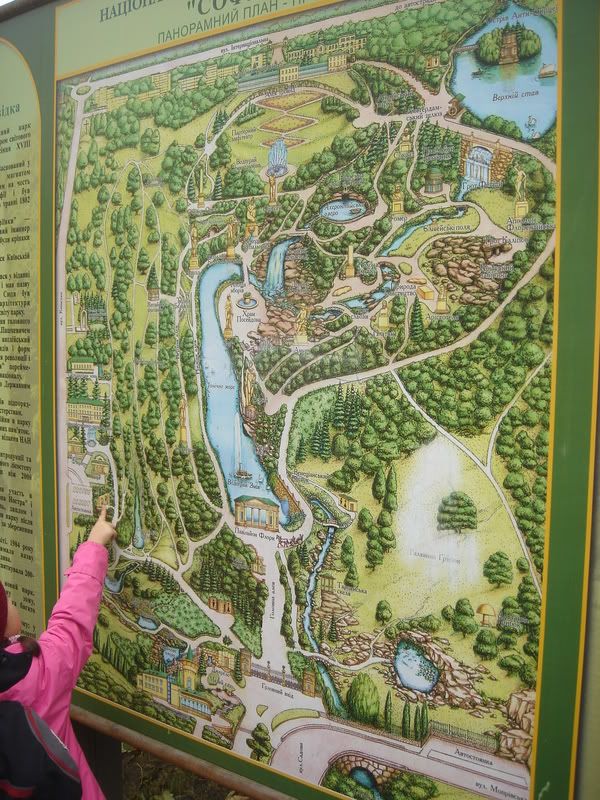
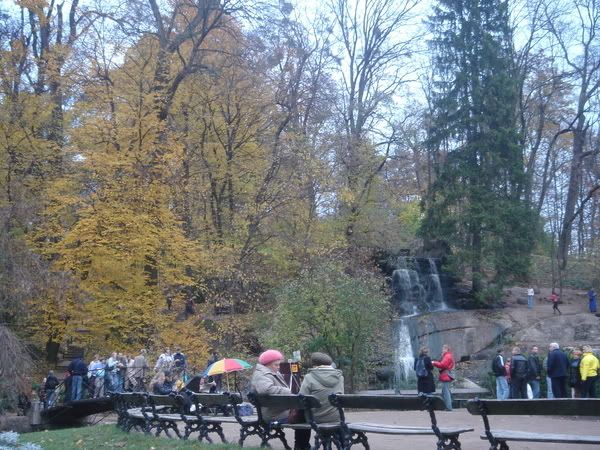
The park was built in honor of a woman named Sophia. A little over a century ago, a nobel had fallen in love with a Polish concubine and built the park over several years as a gift to her. As with everything in Ukraine, much of the park was destroyed during World War II, but it was famous enough to have been rebuilt under the Soviet Union. And guess what? Even with the overcast skies and dim light, it was still beautiful.

Photobucket - Video and Image Hosting
A map of the park

Photobucket - Video and Image Hosting
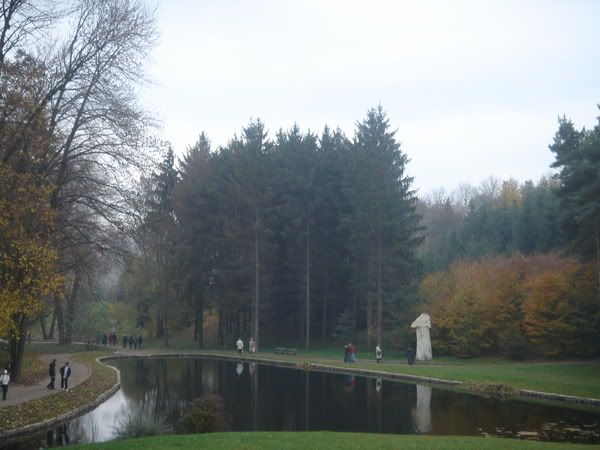
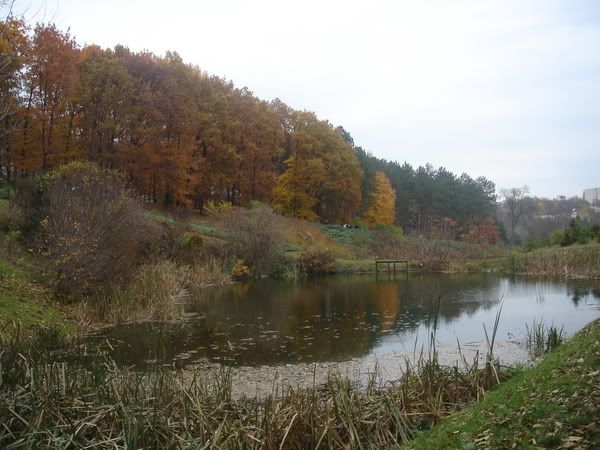
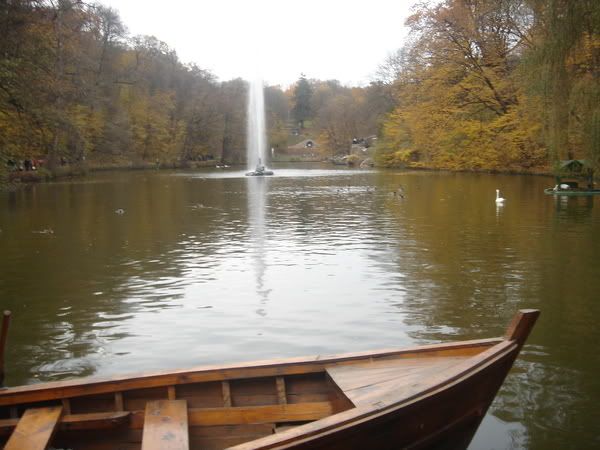
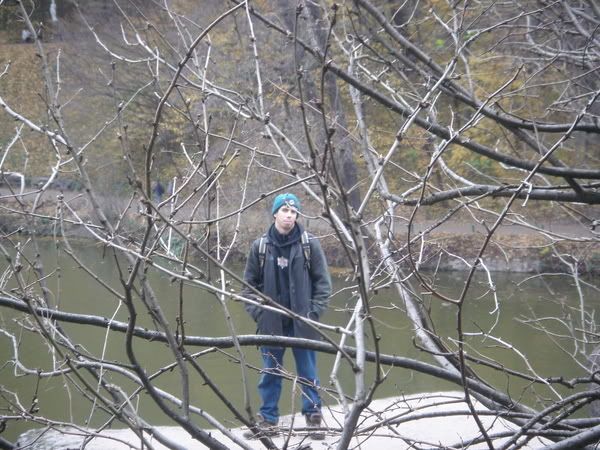
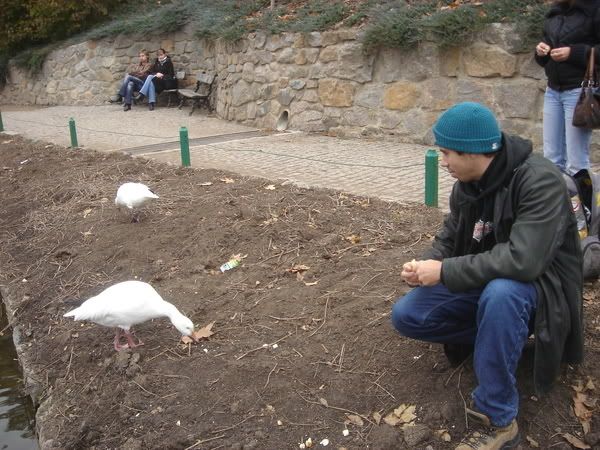
The following photos show nature in her dignity (and show Diana and I being not quite as dignified)

Photobucket - Video and Image Hosting

Photobucket - Video and Image Hosting

Photobucket - Video and Image Hosting

Photobucket - Video and Image Hosting

Photobucket - Video and Image Hosting

Photobucket - Video and Image Hosting

Photobucket - Video and Image Hosting

Photobucket - Video and Image Hosting

Photobucket - Video and Image Hosting

Photobucket - Video and Image Hosting

Photobucket - Video and Image Hosting

Photobucket - Video and Image Hosting

Photobucket - Video and Image Hosting

Photobucket - Video and Image Hosting
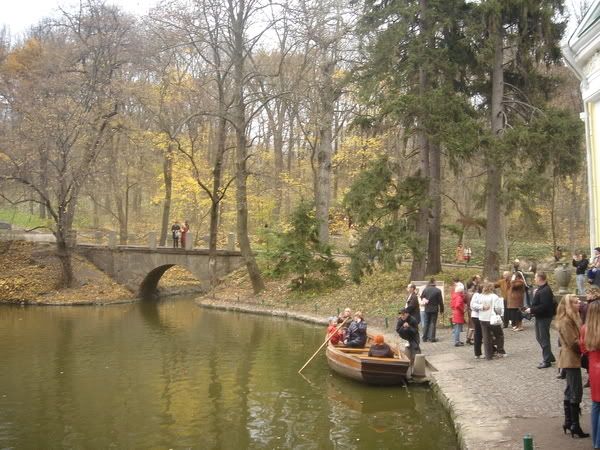
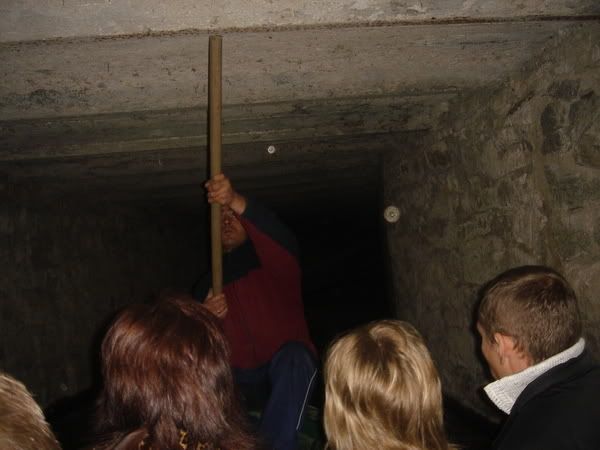
This was kind of cool: there's a long tunnel that goes under the park. For 2 UAH you get in a boat and a guy pushes the boat along the tunnel using a stick. For most of it there's absolutely no light (except from idiots who can't turn off their mobiles and people like me who insist on taking pictures)

Photobucket - Video and Image Hosting

The trip back was shorter than the trip there: a marshrutka to Kyiv and then a marshrutka to Zhytomyr. Unlike buses, marshrutkas haul ass. Of course, the bus station and the train station in Kyiv (which is where one marshrutka arrived and the other left from) are on opposite sides of the city. Also, for all their really efficient Soviet planning, the bus station is inexplicably far away from any metro stops. Which, with it raining again and raining hard, meant we got pretty wet. I blame the cat.

Ukraine: Orphans in Costumes (Pics)

Wednesday, November 08, 2006

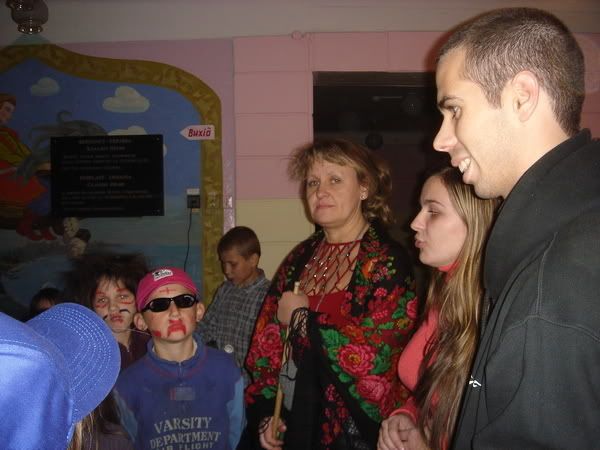
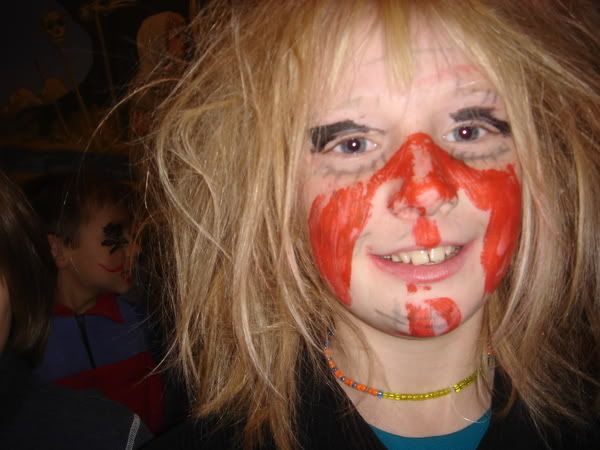
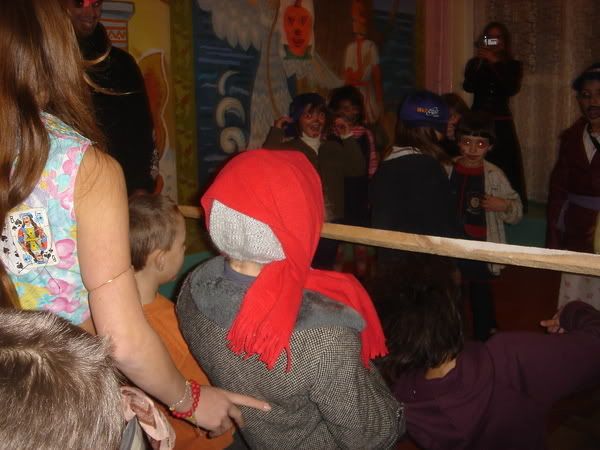
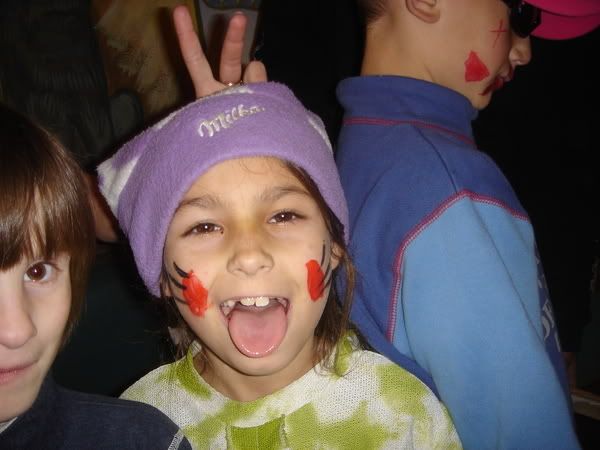
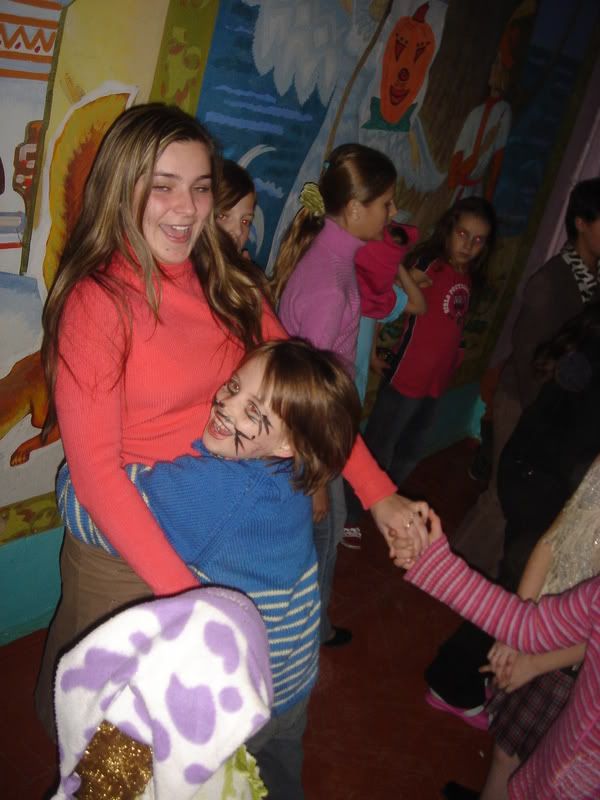
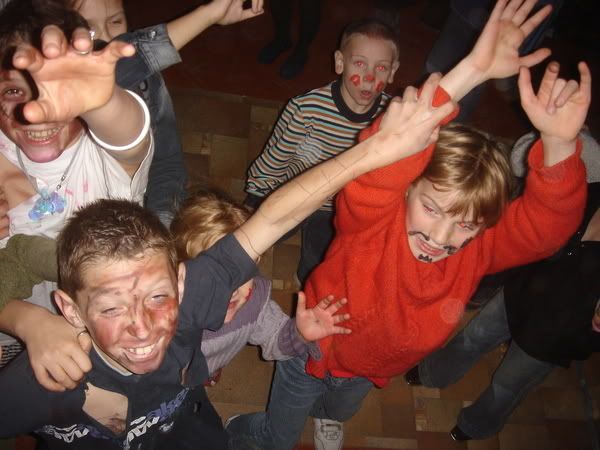
So, on Halloween I was at the orphanage's costume party (but sans costume myself) and had a lot of fun. Here's the pics:

Photobucket - Video and Image Hosting
Tanya and I talking to the orphans about the history of Halloween and how it's celebrated in America. We were kind of put on the spot about this and I found myself lacking a lot of the necessary vocabulary

Photobucket - Video and Image Hosting

Photobucket - Video and Image Hosting
Playing limbo

Photobucket - Video and Image Hosting
I think she's supposed to be a cat

Photobucket - Video and Image Hosting
Tanya getting mobbed

Photobucket - Video and Image Hosting
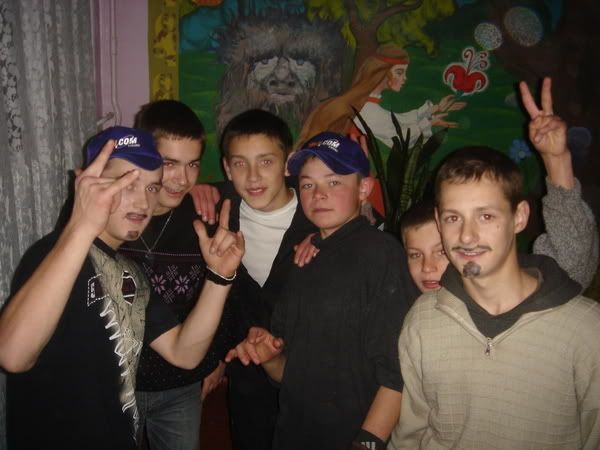
Monsters everywhere!

Photobucket - Video and Image Hosting
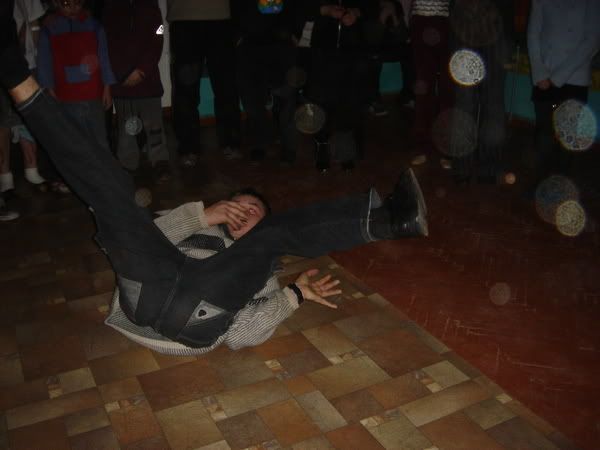
Break dancing

Photobucket - Video and Image Hosting
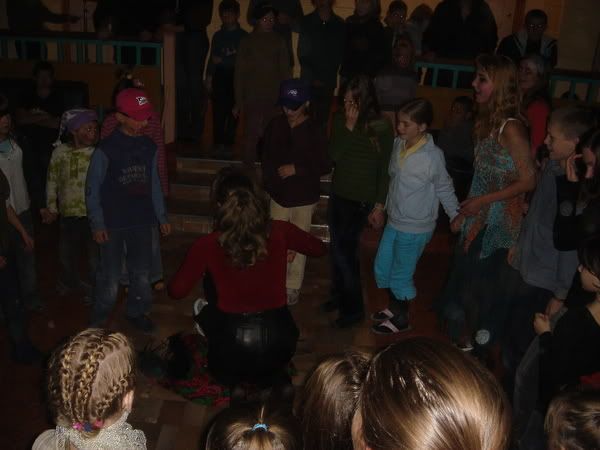
A traditional Ukrainian game of passing a handkerchief in a circle

Photobucket - Video and Image Hosting
The break dancing boys. They asked me to show them some of my moves

So, yeah, fun all around.

Ukraine: What's Been Going On (Pics)

Wednesday, November 01, 2006

Happy Halloween! I’m not celebrating it in any real sense, but I have been invited to the orphanage tonight to see their “Scariest Costume” contest. Should be fun.

Yesterday was the first snow in Zhytomyr. This might be more welcome if we had heat in my apartment building. Some parts of Zhytomyr have heat, some don’t and no one seems to know when the rest of the city will get theirs (this is the favorite topic of conversation at the institute, though). I have a space heater that keeps my bedroom warm and otherwise I just stay in my three layers of clothes. Yesterday I even managed my first multi-layer quick change. Since I had pulled off my “casual” layers (long-sleeve shirt, fleece, Harley-Davidson hoodie) all at once, they were still intact on the chair when I stripped off my “nice” layers (long sleeve shirt, dress shirt and tie, nice sweater) all at once and pulled on my casual layers as if it were one item of clothing.

***

Sarah left just ahead of the real cold, and now she’s back in the states. Soon she’ll be going to India where she has a seasonal job as a kitchen manager at a yoga retreat. In India, I don’t think they have a word for cold.

Since I was teaching we really couldn’t leave Zhytomyr, but here’s some of what we did:

Sarah was missing yoga while she was here, so we went with my friend Tatyana to her yoga class one evening. The instructor had not shown up (for the second class in a row) and an 18 year-old girl who said she knew a lot of yoga volunteered to teach it. What she was showing us was more of a warm-up for a dance class, though, including kicks. We’d be in a dance stretch and someone would ask what the pose was called and she say “I don’t really know, but it’s good for your legs.” The most yoga it got was mid-way through when she asked us to sit in a lotus position and chant “Om”. The problem was that one of the older guys in the class (who was one of several that spent the entire class telling her that she was doing this or that wrong) was trying to convince her that she was doing her “Om”s too quickly. Of course we’re following her, but then while we’re all going “Oooom” he’s doing “Oooooooooooooooooooooooooooooooooooooooooooooooom”. He was literally trying to out om her. Finally the class broke down entirely due to their tug of war and Tatyana suggested that Sarah show us some things since she was very into yoga and had been doing it for a while. This is how Sarah, who speaks only English, ended up teaching a half-hour yoga class to Ukrainians…and doing a good job, too.

***
Photobucket - Video and Image Hosting
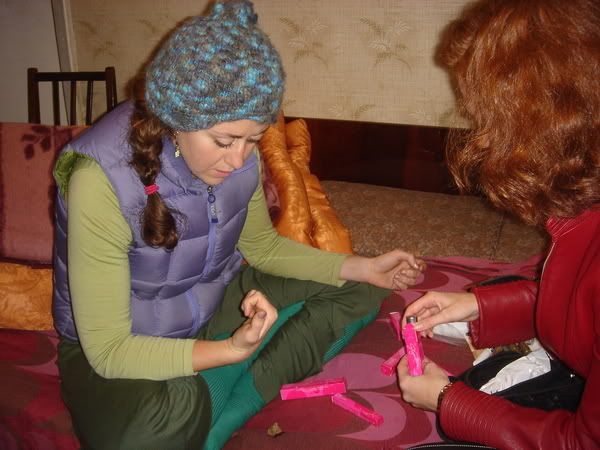
All the decked-out Ukrainian women convinced Sarah to attempt to beautify. Since they're so cheap, she got a facial, a pedicure and a manicure while here. My friend Irina took her to all these things and then taught her about the joys of make-up.

***
Photobucket - Video and Image Hosting
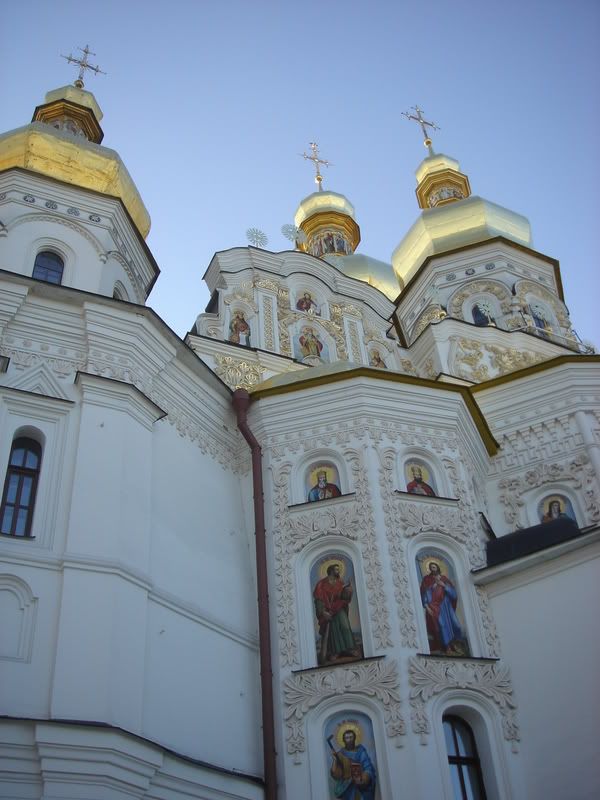
On my one day off we took a day-trip to Kyiv to see the Percheska Lavra (Caves Monastary)

***
Photobucket - Video and Image Hosting
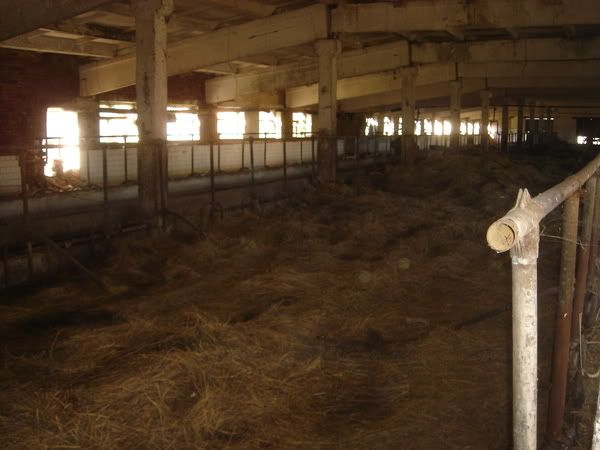
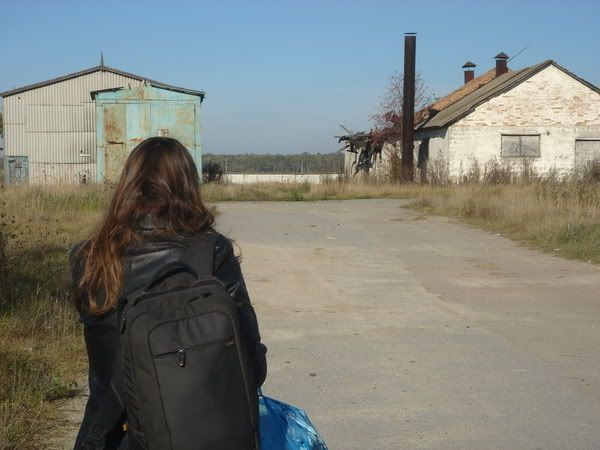
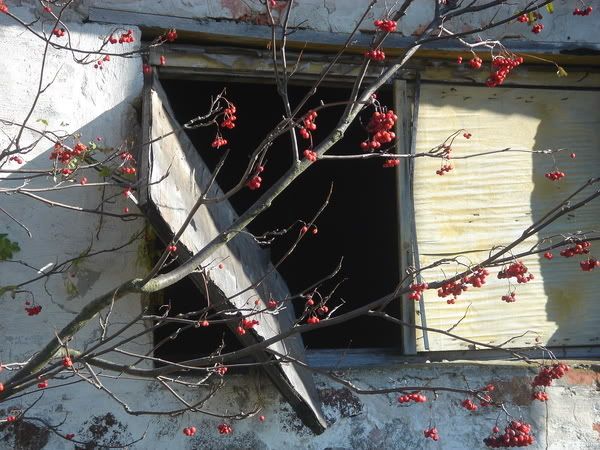
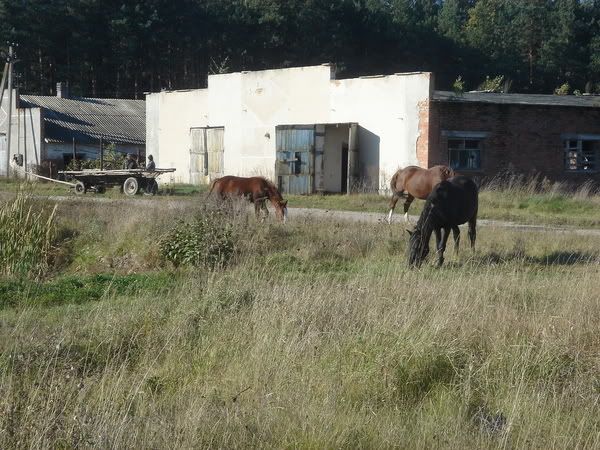
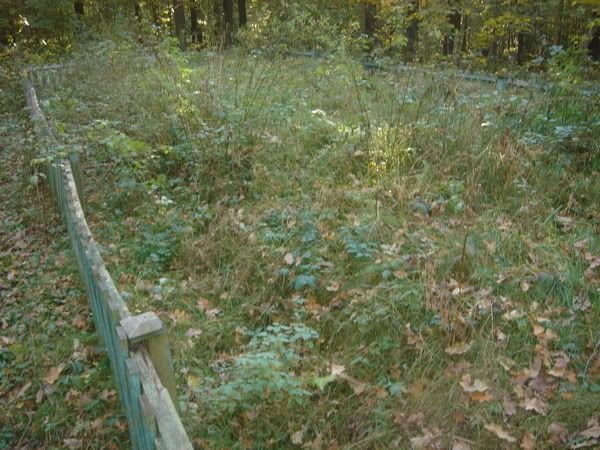
I took both Sarah and Amy to visit both an old USSR collective farm and to the mass graves from the Holocaust. Above and the next three below are the remains of the farm, where villagers still graze their horses. During Soviet times, farmers were required to keep all their livestock and mill all their grain here. It was unproductive, but let the Soviets be able to take their cut.
Photobucket - Video and Image Hosting

Photobucket - Video and Image Hosting

Photobucket - Video and Image Hosting

Photobucket - Video and Image Hosting
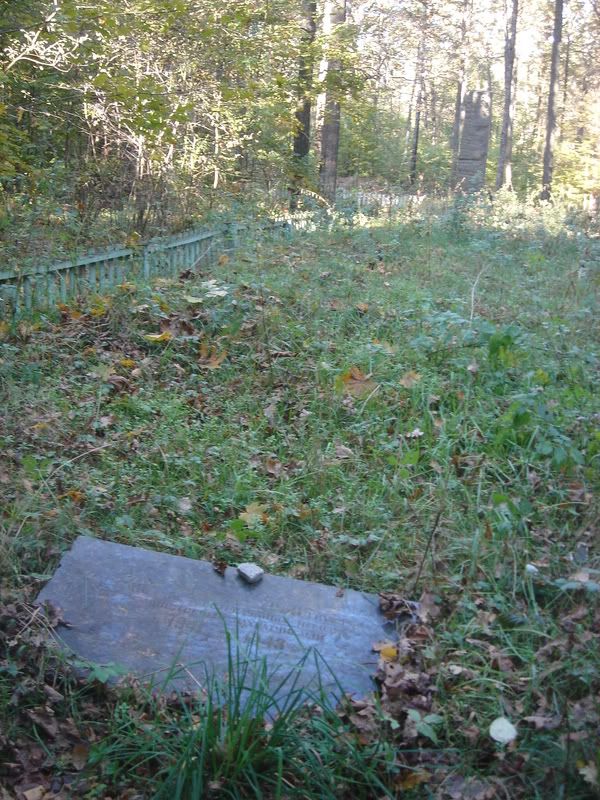
Above and below are pictures of the mass graves
Photobucket - Video and Image Hosting

***

I got interviewed on television. The local news station had a camera set up by a statue of Sergei Korolov that’s near my apartment. Korolov, if you’ve never heard of him, designed Mir, the first manmade object in space, and also designed the ship that let Yuri Gagarin become the first man in space (yes, we did loose that part of the space race). Having been raised in Zhytomyr, Korolov is my city’s favorite son. They stopped Sarah and I as we walked past and asked me if I knew who the statue was of. It was Korolov’s birthday, and they were doing a piece on him, seeing what Zhytomyr residents did and did not know about him. I said I did and said who he was and they could tell from my accent that I wasn’t Ukrainian. They asked where I was from and I told them and they seemed excited to interview an American. They then asked if I knew why Korolov was famous. Here, my Russian ran into trouble. I didn’t know the word for “design” or “spaceship”, so what the citizens of Zhytomyr heard last night was an American telling them that their local hero had “prepared the first car to go into space.”

***

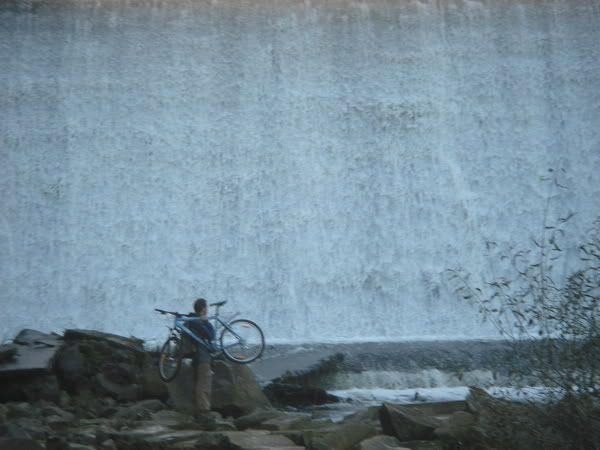
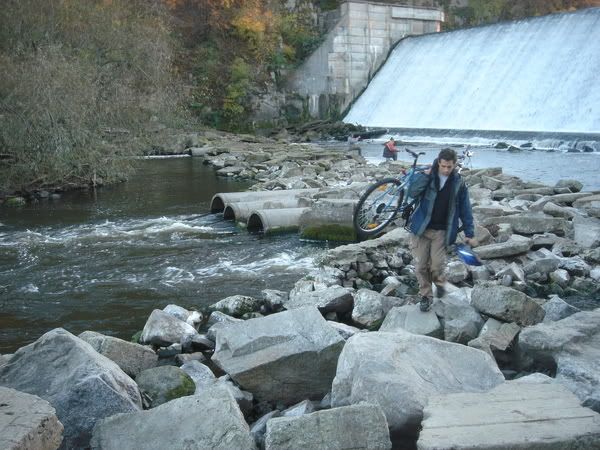
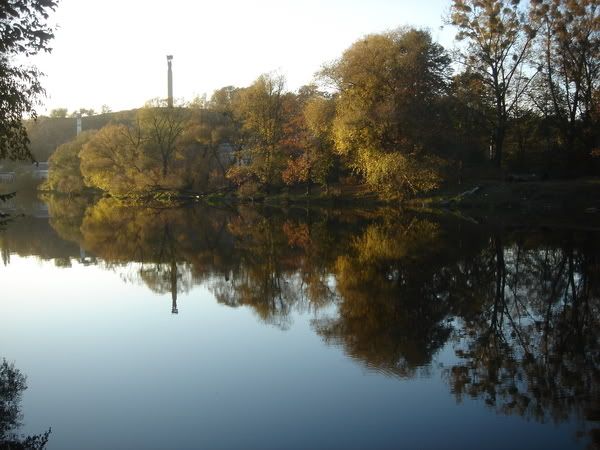
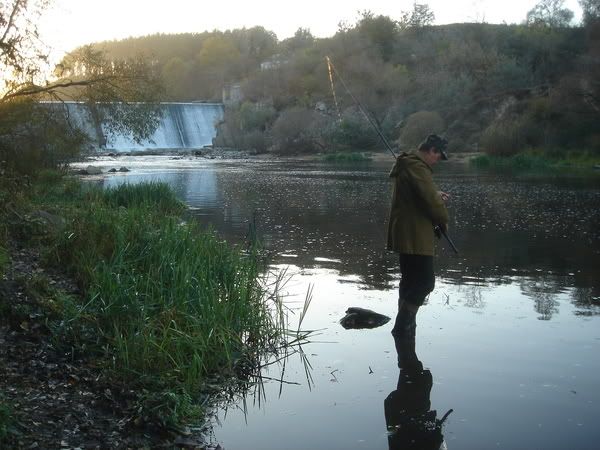
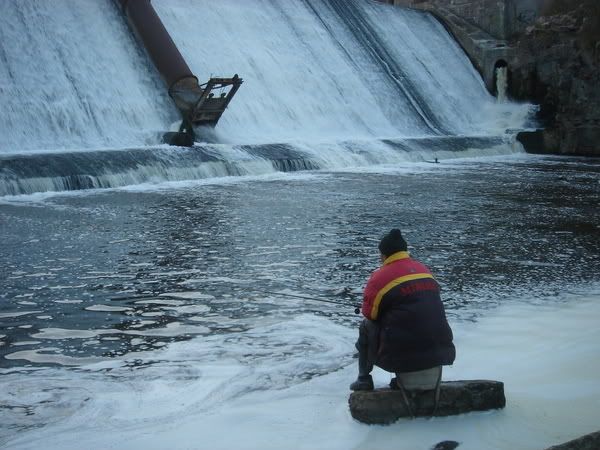
Sarah and I took two of the bikes we got with the grant and did a circuit across the condemned bridge, down to a path by the river, along the river to the man-made waterfall/dam (where sewage is also dumped) and then we carried the bikes across the river to ride up to the WWII momument (with the eternal flame that wasn't burning) and then back to my apartment. Done at sunset, the whole route was gorgeous.
Photobucket - Video and Image Hosting
Here you can see the WWII memorial in the distance as we bike along the Teatriv River
Photobucket - Video and Image Hosting

Photobucket - Video and Image Hosting
Me, carrying my bike in front of the waterfall
Photobucket - Video and Image Hosting

Photobucket - Video and Image Hosting

***

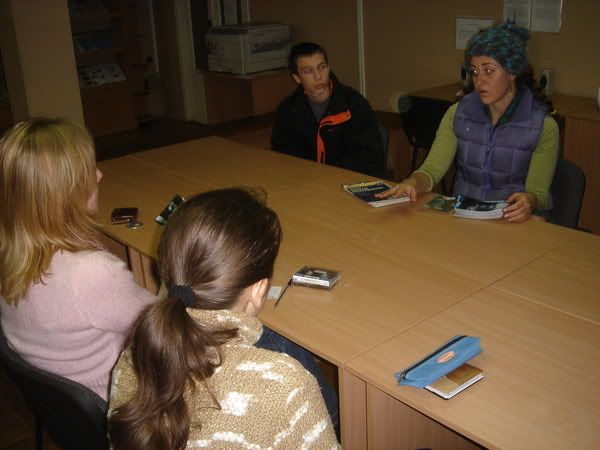
Sarah was kind enough to talk to a English-education group at the local library. She brought photos and told them about her work as a wilderness ranger in Alaska
Photobucket - Video and Image Hosting

***

This is what I have been doing since Sarah left:

Photobucket - Video and Image Hosting

It is the entire British Councils Recertification Curriculum (what we teach at the Institute), re-written. Since almost every teacher attending courses at the institute has already done the curriculm (they have to get recertified every five years), we needed a new one, which is essentially the results of me developing my lesson plans over the past two years. It took a week to get everything typed up and organized, but there you go: one copy for me, one for Peace Corps, one for the institute and three for the new Teacher Trainers that just arrived in Ukraine last month (and whom I worked with and gave feedback to when they came to give practice lessons at the institute two days ago)

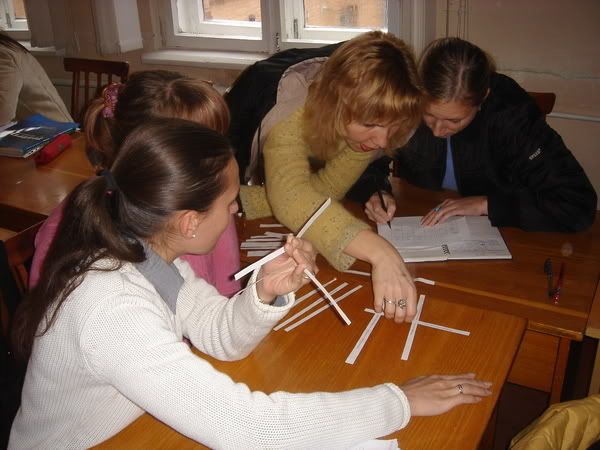
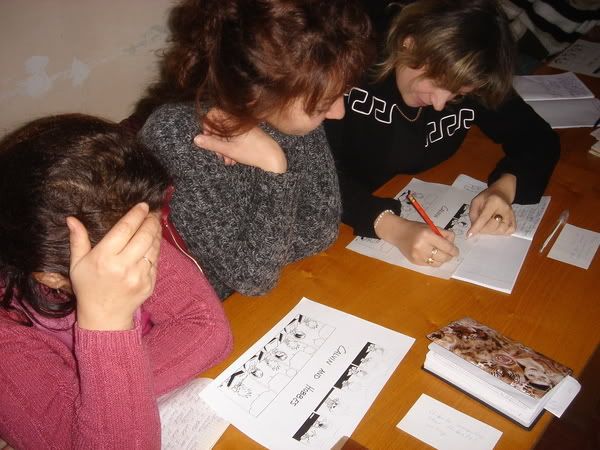
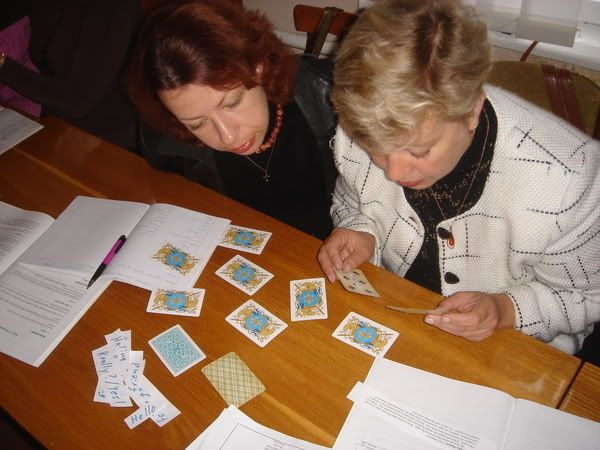
Here's some pics from my lastest group of teachers:
Photobucket - Video and Image Hosting
Doing a reading/creative thinking exercise
Photobucket - Video and Image Hosting
Rewriting a Calvin and Hobbes comic strip
Photobucket - Video and Image Hosting
Working with flashcards

***
And that's about it! I'll leave with one final photo:

My friend Amy wanted to visit Zhytomyr to hang out and climb and asked to bring a friend. "Is she cute?" I asked, jokingly. Turned out she was. She was a New Zealander (Kiwi) named Livvy who was living in Prague and met Amy, who lives in Ukraine, when Amy was in New Zealand. Confused yet? Anyway, it turns out she actually was cute and I got to make out with my first Kiwi. Between her and "Lord of The Rings", I'd really like to visit New Zealand now.
Photobucket - Video and Image Hosting
Me, Livvy and Amy before going to a club
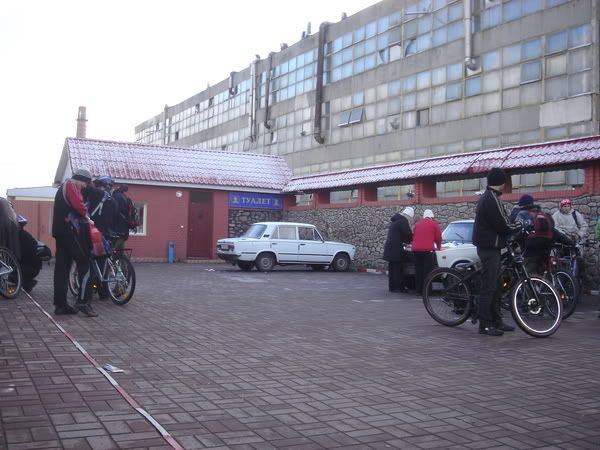
*
*
*