| This website does not represent the opinions of Peace Corps or The United States of America
|
|
|
Home >
|
Living a life somewhere between Lonely Planet, Education Weekly and the Penthouse Forum...
|
|
America: Back!
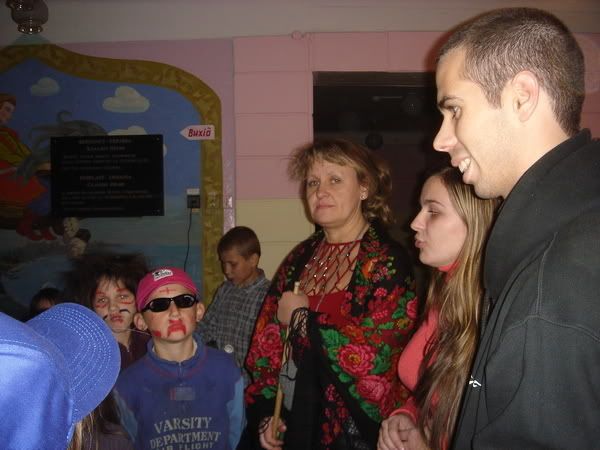
Yes, I am back in the States. Got in on two Sundays ago and have been spending time with the family. This included a Halloween thing at Disney with my niece who was, and this is not conjecture but based on empirical fact, the most adorable Snow White ever. For the record, I was some sort of pusticle-sporting zombie thing thanks to the wet-on tattoos my sister brought over since she disagreed with my conjecture that my Halloween costume would be "Snow White's Uncle". I'm in Orlando for about another week before heading up to Augusta, Georgia for about a couple of weeks with the dual goals of finishing editing my film and spending time with my father, whom I haven't spent more than a few dozen hours with since I was 16. It's time for both of those to be taken to the next level. I've been off the radar for a while because, frankly, I didn't want to tell anyone what I was doing. The last month in Ukraine saw me getting connections in Ukraine with both ANTIFA and Skinhead groups in Zhytomyr and Kyiv. ANTIFA is a group of guys that get together and find skinheads to beat up. They asked me to come film them doing it, but the night I went out with them, they didn't find any. After contacting the skinheads, the ones from Zhytomyr threatened me, but the Kyiv skinheads surprisingly opened up and gave me hours of interviews about their beliefs, how they recruit and train others and about their "actions", where they find Jews or minorities and beat them up. One of the interviewed skinheads was wanted by the cops and another was awaiting trial in January for the murder of a Korean, who died in the hospital after being beaten up by the skinheads. They also asked me to come film one of their actions. Although it would have been strong footage for the documentary, after some soul searching I declined. I simply could not watch someone being beaten up and not intervene. The fact that I was willing to film ANTIFA do the same to skinheads is a hypocrisy I don't feel like exploring. That footage, along with many, many interviews with Jews who had been attacked in what the Jewish media, at least, is calling a "surge" in antisemitic activity in Ukraine, is now what will be the film, with the Holocaust interviews and footage serving as a historical framework. I've settled into my new place (I'm renting the second floor of a friend's two story house) and set up my editing work station. Editing isn't as exciting as shooting, but it's not as exhausting, either, and I've welcomed the slow pace of life after months of what felt like living on marshrutkas and trains, always at the beck and call of a text message that might possibly lead to an interview.
In any case, it's good to be back.
Ukraine: Nearing the End
So life has been pretty interesting in the month or more since I last posted. I've visited a number of other cities, from really antisemtic Lviv in the west (covered in swastika grafitti and some 80 percent of people interviewed on the street had something bad to say about Jews) to pretty-inclusive Poltava, where people stopped on the street railed about what little antisemitic graffiti there was up (of course it was up; you can't escape it in Ukraine, save, perhaps, in Odessa). But ironically it was there that I talked to not one, but two rabid antisemites. Both pulled out books to show me. One was by Vasiliy Yaremenko. The other was by David Duke. Small world. I had contacted David Duke by email to get his permission to use excerpts from his radio broadcasts in the documentary. He wrote back and agreed. Former Klu Klux Klan member, former Representative from Louisiana, he's authored some bestselling (in Eastern Europe anyway) books about a Jewish conspiracy to control the world. He's also recieved a doctoral degree from MAUP, a university in Ukraine infamous for publishing literature of similar themes. He is ardently anti-zionist, some would say antisemetic, although that kind of talk gets you sued. The week before I had interviewed Yaremenko on camera, who is also a director at MAUP and he spoke for a long time about how Jews are in complete control of Ukrainain politics and finances and responsible for the millions of Ukrainian deaths in a famine manufactured under Stalin in the '20s. He told me, at interview's end and when the camera was off, that if I said he was antisemtic in the film or misrepresented his words, he would sue me. It's not an empty threat: MAUP has sued pretty much anyone who has said it or Yaremenko is antisemitic for slander. I'm not worried: I have no intention of saying he is antisemtic or misrepresenting him. I'm just going to put what he said in the film and let people make their own decisions. I did get thrown of MAUP's campus later, though. I was interviewing students, all of whom (of course) said positive things about the university and all (but one) admitted they didn't read the publications that MAUP is so infamous for. Then security escorted me off. I was on the sidewalk getting interviews from students and had every right to be there, but security kept bugging me to leave and was intercepting me from talking to students. So I got some shots of a kiosk of theirs selling books about the "Jewish question" with them continually asking/telling me to leave but hamstrung by the fact that they could not actually make me do so on the sidewalk. Part of it is on tape, although when they told me to turn the camera off I did because, I don't know, I'm not a complete jerk and I sympathize: they don't want me interviewing their students without permission and its the response most universities would have. It's made me think a lot lately. I could so easily put forth all this stuff about MAUP making it look bad and then toss in, without commentary, these three guards, pointing me off campus and people would go: "look, they're scared becaues they know they're antisemetic" and, really, that's too easy and facile. These issues are so touchy, especially here, that I'm really commited to making as serious and balanced a work as I can without resorting to Michael Moore type tactics (which I say with all respect considering his films started my interest in documentaries, but if you ever deconstruct "Bowling for Columbine" you realize how easy you can lie or mislead via editing). Still, those books that the antisemites (and they proudly labeled themselves antisemites, so no worries about libel there) had seemed to have left an impression. Both, one on camera and the other off, vehemently went on about Jewish control in Ukraine. The off camera one's suggestion was to "do something" but was unsure what. The on camera one had less ambiguity: "kill them all." I brought up a Jewish woman I had interviewed several weeks before: she had just been attacked with her husband in Zhytomyr, and she was left in the hospital for two weeks. She has 8 kids. Did he really agree with that kind of violence. "Yes," he said. "She hasn't done anything to you," I said. "She's raising 8 more Jews who will likely become Zionists." Even he agreed, though, that his views were in the extreme minority in Ukraine, but only because Ukrainians hadn't yet "woken up" about it. With his interview, I finally felt I had enough sides: official and street, Jewish and anti-Jewish, to give a depiction of the status of Ukraine today. I still have some stuff I'm shooting here and there and couple more interviews lined up, but I've even been closing off the tap of interest in talking to me because I'm at risk of overflowing and my main job now is get rid of everything I don't need. Both sides have threatened to sue me, though, including the head of the Union for the Council of Soviet Jewry for Ukraine. He's a great guy, actually, but he's just as worried about being represented as everyone else. It's nice to know I've got everybody worried, though. I once heard that a perfectly balanced journalism piece on a controversial topic is one that pisses off both sides. If one is happy, it's because you leaned too much their way. Possibly I should have just made a film only about antisemitism in Ukraine. It wasn't where I originally started and I don't know that many people would find it interesting divorced from the story of the Holocaust in Ukraine. Especially, as everyone points out, if you want to do a story on antisemtisim in Europe, go to Russia. But the holocaust story in Ukraine has been the most frustrating because historical footage and photographs have been extremely hard to get a hold of, at least in the quality I need for showing in a film. The archives in Ukraine are a beaurcratic nightmare and the one in America is obscenely expensive ($15 per photo, and don't get me started on film). Someone explain to me why I decided my first film should be an historical one in a foreign country and requires the use of four languages? I've been milking the networking. The path of the holocaust is well-trodden, at least by museum exhibitors. It's a matter of getting their permission and materials. I thought I had a good thing going at the Lviv museum. Three days spent having coffee with the curator and together we got permission from the director. But all those photos are on a hard drive she didn't have access to because the person was on vacation. And now they don't want to mail them to me and I think said currator is avoiding my phone calls. I think I'm going to have to make another trip there to try and get those materials. That's okay, there's also a crazy rabbi there to interview. They tried to set his door on fire, among other things, but he also talks nonstop in a stream of conciousness way (he once went on for half an hour on the phone with me, me not saying a word, about the numerical importance of the sabbath. The question I had asked him was "when did this happen?" refering to the door-on-fire incident. He actually never answered that question. I also have a contact through a contact with the Kyiv archive and another contact through a contact for the Zhytomyr one (although that one tried to milk me by trying to sell me "archival" footage, which turned out to be bootlegged DVDs of BBC documentaries on the war dubbed in Russian. I did pick up some of them off him both for goodwill and to use the footage as temp footage during editing until I get access to higher quality. I'm hoping he'll come through on photographs). All of this stuff is public forum, even by Ukrainian law, but it's a matter of getting good quality scans. It all should be wrapping up soon, though. Editing is coming along well, but slowly, and my intention to completly edit in Ukraine has been changed by changing visa laws. I was all set to get on a train to Poland last night to stay for as long as it took me to walk back over to Ukraine. Why? Because Americans get a 90 day stay for free. People had been leaving and coming back every 90 days to work in Ukraine (as had been my intention) when not one, but two people tipped me off at dinner AN HOUR before I was to get on the train that they had just changed the visa rules that if you came in under the 90 day thing, you had to leave for 6 months before you could do it again. So I might have gotten off in Poland with only a change of clothes and a tooth brush and had not been able to get back in again, with all my stuff still in zhytomyr. As is, I talked to the American embassy and the best bet is to do what other people have done: overstay the 90 days and pay a fine on the way out (between $18 and $140 depending on the border guard, but legally it can not be more than $140). I ate the ticket to Poland and went out with friends to a latin-themed dance club. But I also don't like staying in the country illegally, so I'm going wrap things up and be out by the end of September. My ticket between Budapest and New York is moveable to when I want, but the New York to Orlando ticket is October 4th, moveable at $30 a time, so I might as well make that the target date. Right now I'm babysitting a scanner in Kyiv, scanning orginal documents left by the Nazis. It's about 50 large leaflets dealing with Jews in '41-'42. Announcements to go the the ghetto and how much they could bring, announcements that aiding Jews would bring a death penalty, announcements proclaiming to Ukrainian that the horrors of the Soviet Unions were due to Jews, and announcements for "relocation" and for Jews to gather for it, which is when they would take them outside the city and shoot them. Little of it is of use in the film, it's all in Russian or Ukrainian and has nothing visual, but since I came upon this small cache of documents at a small institute in Kyiv (friend of a friend thing again) I've decided I want to preserve it. A lot of what I've found and will get is going on the web, so others can have less trouble finding and using these materials. I hope to create a small, free online archive of sorts of scanned original materials so that people can use them in research or documentaries. Anyway, in all liklihood I'll be back in Orlando October 4th, laden with hard drives laden with stuff. Wish me luck!
Ukraine: Documentary, July 28
Left Odessa last night after four days of filming and four nights of partying. Odessa started off badly. My main reason for going was to film the new mass grave they found last month. More than 11,000 Jews had been executed and buried there, only discovered when workers were digging to lay wires. My contact with the Jewish center here said I could get in with a team that was going daily to the grave to examine it. He said that last week when I bought the ticket, but the day before, when I called to see if we were going the day I got off the train (I was arriving at 6 AM), he said just to come down, meet him at 10: 30 and we would talk about it. I met him. He said work had already finished, but gave me information about how to get there. It was outside a village. There was only one bus there per day, 4.5 hours. Once there, I would need to find someone to take me in for the night. I called the contact there he gave me. She told me there wasn't much to see, but that I was welcome to come. The bones had been reburied, leaving only a dirt and sand patch. Was that worth spending two days going out to? I talked to my contact. Aren't there photos, videos? Sure. Who has them? He's not sure. *** Another frustration was a lack of a place to stay. I was crashing the first night with a Peace Corps Volunteer, but he was leaving the next day. I knew three other Ukrainians in Odessa (had dated two of them) and they knew I was coming down. Surely someone would have a place for me to sleep. I called. Two were leaving town that day, one rented a room from a woman and was not allowed to have guests. Hmm. Should have planned this all better. But then said Peace Corps volunteer introduced me to four other volunteers in Odessa on vacation. Together, we rented an apartment. Craziness ensued. *** The next day I had a follow-up interview with a holocaust surivor that I had interviewed the previous day. He took me out to the spot where his family had been murdered, along with 10,000 other Jews. He, a boy at the time, had escaped in the melee. He was one of three holocaust survivors I interviewed in Odessa, all of their stories heartbreaking. One had a friend whose mother had saved her daughter by putting her back to the firing squad and holding her daughter in front of her. She fell into the pit dead, but the daughter was unharmed. When the daughter--whose name was Sofika--crawled out of the pit, she came face to face with a German soldier left to guard the pit. He pointed his gun at her, then lowered it, letting her leave. She came to a house and the woman there took her in, told her to forget she was a Jew and then raised her. Sofika--who did not look Jewish--changed her name to Dasha, grew up, married a Ukrainian and had two children, who never learned their Jewish heritage. When the woman I interviewed ran into her long after the war, Sofika/Dasha begged her to keep her heritage secret. It was only until after the fall of the Soviet Union and Sofika/Dasha felt it was okay to talk about. *** With getting to the grave a bust, I decided to explore the other incident I thought would be worth filming: Odessa had about 700 graves at the Jewish cemetary defaced withswastikas in May. I was told that they'd been cleaned and it wasn'tworth going out there, but I decided to see if I could at least speakto someone. I introduced myself to the caretaker and he said hedidn't want to talk about it, on camera or at all, and, no, there wasno one else I could talk to. He was being a bit of a dick, actually.So we stand there for a few minutes, me debating my options (none) andhe asks if I smoke. I say I do, thinking he's asking to have acigarette with me and maybe I'll massage this into him talking. Heasks if I have matches. Oh. I don't. He complains he's askedeveryone coming into the cemetary for two hours and no one has, hencehim not smoking. I leave. It's on the outside of the city, but afterabout ten minutes of walking I find a kiosk, buy a pack of Malborosand two lighters and head back.I hand him a lighter and we both sit down on a bench. I smoke one I just bought, taking the smoke into my mouth without inhaling yet (BillClinton was right, it can be done) until we're both down to thefilter. We do this without speaking, and then he says "What do youwant to know?" By now I have learned to not ask a single question or, in fact, letanyone speak until the camera is out. People have the tendency tojust start talking, camera or no, and when they start it's usually themost important stuff. So I take out the camera. He doesn't want tobe on camera. So I point it to the distance figuring I'll get shotsof his hands or whatever. He says it can record his voice, but thecamera has to be in the bag. So I hook up a shotgun mic, it's cordnow trailing into the bag, which he confirms is closed. Then hestarts talking. It's not top secret shit, either, just what he foundand how long it took them to clean it off and he's kind of annoyed athaving to do the work, and there's also a tinge that he doesn't likethe Jews either. Not that they deserved it, but that he's got toclean up graves because of something going on between them and theskinheads.So we wrap it up and I'm wondering what I'm going to do with just avoice. Overlay images of the defaced graves? Who do I get thosefrom? I had already asked about them, but no one seemed to know who would have them. The caretaker--Sergei--seemed to think it was a waste of time to filmthe graves at this point, but I needed some kind of imagery. After mehassling him, he pointed to which area they were in. And I wasfucking jaw-dropped when I got there. Grave after fucking grave stillhad the swastikas on them. Some had been scrubbed to where there was only a ghost of them, some just had the red paint in between carvedletters, where scrubbing was too much effort, but a number seemed tohave not been cleaned at all. Within fifteen minutes I had shot atleast 40 graves with recognizable swastikas on them, all the worsebecause many of the graves had pictures of the deceased carved intothem, so there's a swastika right over their faces. One--of aswastika right over the face of this 8 year-old boy, was heartbreaking. Most of the graves had fencing around them, a traditionhere, so it meant the people who did it climbed over 700 differentfences to paint that many graves. Fucking A. And the fact that anattempt had been made to clean them meant that they'll remain that wayuntil the paint is finally weathered off. You could probably come inten years and still see them. Despite that, Odessa is quite anti-antisemitic. What few antisemiticgraffiti I saw was crossed out with ANTIFA painted below (which standsfor anitfasism) and I saw far more ANIFA graffiti, including stenciledspray paints of a silloutte tossing a swastika in a trash can andwriting like "death to fasisim" and "die Nazi scum". I also saw farmore anti-NATO graffiti and hammer and sickles, meaning Odessa'sconcerns are quite different from say, Zhytomyr and Lviv, which iswhere hard-core Nationalism is on the rise.In the end, I lucked out with Sergei. Another guy, Pavel, was therewhen I returned from the graves, carving a headstone set up on two sawhorses. That was visually interesting, so I asked to film it, and heagreed, provided I didn't show his face. He had helped clean thegraffiti on the graves as well, telling me about it with the camerapointed at the headstone. Sergei came over after a while and jokedwith Pavel, me making sure to keep the camera pointed down and not really seeing where it was pointed but hoping to catch anything goodthey might say on the mic. I looked at the footage later, though, andit's about three minutes of Sergei's hands on the shiny granite, halfhis body reflected but not is face. It was the perfect "anonymous"image to go with his voice and I didn't even mean for it to happen. *** I spent three days hassling everyone I could meet about getting photos or videos of the mass graves or the cemetary defacement. The secretary at the Jewish Cultural Center took to glaring at me the second I walked in. I hated to be a problem to anyone, but at the same time if you don't push in this country, it doesn't happen. Finally I got a hold of the press guy for the Synagogue. I met him at his office. He had deleted those photos, he told me. What? Well, maybe this other guy had them on his computer, but he was in Israel. Maybe my frustration leaked through, because he asked me to wait and went to make some calls. I really felt low. All the way down here, burning money that's not coming back anytime soon, to not get any useable evidence of this grave. The Holocaust testimonials and the footage from the cemetary was great, but I had pinned a lot of hope on this mass grave. I hoped to bookend the film with the grave's discovery. It made the film timely, that more than 60 years later, we were still finding graves from this relatively unknown part of the Holocaust. The press guy comes back with a piece of paper with a code on it. Had he seriously just called this guy in Israel? He punches the code into this other guy's computer and is soon rooting through photos. He finds them and transfers them to my ipod. Then he says "maybe you could use this," and holds up a DVD. He pops it into the computer and it's RAW FOOTAGE of the graves the day they were found, including INTERVIEWS WITH THE PEOPLE WHO FOUND THEM. "You can take this and copy it if you want," he said, my eyes bugging out of my head. "Who shot this?" I asked. "Who do I need to ask for permission to use it?" "Oh, it's ours," he said, "we bought it off of a television station." "Can I get written permission from you to use this in my film?" "Yeah, I'll just get the rabbi to do it when he gets back." I practically ran down the street to find an internet cafe and had them copy the disk. I had them check it twice before I gave it back and still occassionally find myself patting it in my backpack. The next day, the press guy, who I still want to kiss as I type this (in a very hetero-masculine way), said he found where to get photos of the defaced headstones. He couldn't get them before I left, but he promised he'd put them on disk and give them to the volunteer in Odessa, who can mail them to me. And when the rabbi gets back he'll see about getting permission. It was like a three day knot unwound from my body. I spent my last five hours in Odessa on a beach with another volunteer, playing beach volleyball, swimming in the Black Sea, listening to music pumped out from a PA system (interrupted repeatedly by offers of a free SIM card from the mobile company sponsoring the music) and oggling the many beautiful sights (Ukrainians don't have much problem with sunbathing topless). Life is good.
Ukraine: Documenary, July 22
The film finally has a working title: Black Earth: the Holocaust and Antisemitism in Ukraine "Black Earth", of course, refers to Ukraine's famed black earth, but possibly people won't know that. I like the associations with the sins and the mass graves, but I can also see someone thinking it's about African-Americans. Interviewed the director of the Zhytomyr branch of MAUP, theuniversity that puts out the antisemitic lietrature. It was a he, now it's a she. I don't know why he was suddenly replaced, but at least she was willing to talk. We talked aboutMAUP having its accredidation pulled, but when I moved onto theliterature, she said she never actually read the stuff THAT THEYDISTRIBUTE AT THEIR SCHOOL. Interviewed the cop who is responsible for the rabbi attack case. Hedidn't want to talk on camera, but the camera was on my shoulder andpointing off at an angle, so I switched it on anyway. He doesn'tthink they'll catch the guys who did it, but said they were steppingup patrols near the synagogue.I interviewed the rabbi who had been attacked the next morning. Allthe Jews have been cautious about saying anything bad about theauthorities on camera, but he was so livid that he was tearing intotheir lack of effort and their constant denial that any attacks areantisemitic vs. acts of hooliganism. The problem: Daniel didn't havethe camera switched on. I had turned it on during set-up because hewas working on his computer and I figured I could use it for cutshots, but when I had the mic ready and was starting the interview, Imust have instinctively hit the record but (no memory of doing this,but it's what must have happened) because next thing I know the camerais powering down from being left idling too long and when I switch itback on I notice only a minute of tape has rolled (the minute from set that, but I missed his initial outburst about the cops. Grr. He andI are still supposed to have a lengthy sit down interview about a broad number of topics, so maybe I can get him to say it again. Went to Kyiv yesterday and was taken on a personal 3 hour tour of Babyn Yar by the head of the Judaica institute. She talked so much it took up 2.5 hours of tape and ran my battery into the ground. I thought it would be much briefer and left my back-up battery in Zhytomyr (I had forgotten to charge it the night before anyway) and as I watched the battery tick down I started to go to manual on everything, including the focus, to save power. Thing is, she standing still. We're walking all over Babyn Yar and I'm shooting handheld, monitoring sound, keeping focus, trying to understand her Russian and trying not to fall on all the rocks and branches (it's a big ravine). I was mentally exhausted by the end, but got a lot of good information. More to the point, she gave me permission to dig throughtheir archives. She says they have a number of photos from the war, which I should be able to scan myself. This is good, because the Holocaust Memorial Museum in DC wants $15 for EACH PHOTO that they give me on disk. Fuck that. I'm also getting slightly raped by the archives here in Zhytomyr. FINALLY, after a whole lot of wrangling, I got access to the archives and it's a treasure trove. Page after hand-written page of tesitmonies and findings that the Soviets compiled on any bit of paper they could find (some of it is on the back of German maps), documenting what had happened in Zhytomyr and Berdichev during the war and then locking it all away. It even looks visually good: this thick folder of aging paper, and the writing is in various colors: blue, purple, red, black, with notes in the margins. Problem is, I have yet to get permission tophotograph it (technically I should not be allowed to at all, but I'mholding out hope), and I couldn't even photocopy it because--had thephotocopier not been broken anyway--I need permission from thedirector for each PAGE copied, and when I do get that permission, eachone will cost me 7 UAH ($1.40) (so much for me planning on copyingeverything to have a small archive of my own). Marina and I jokingly concoted a plan for taking turns in the bathroomphotographing them with a digital camera, but we're not so stupid as to actually try it. Still, that moment was a long time coming. I'd seen parts of thetexts already: there are microfiche copies of some of it in Yad Vashemand the Garrards (the authors who wrote the Bones of Berdichev)reference them in their book, but even they haven't seen the actualcopies, and there I was, with them in my hands, sitting at a desk andflipping through them. I didn't even want to give them back becausesome paranoid part of me worried that the next time I came back I'dhave lost permission to see them or that they'd have dissapeared.It's hard to explain how important these pieces of paper are to me.They aren't even typed Soviet reports or anything. It's thehandwriting from 60 years ago of a handful of NKVD officers goingaround saying "what happened here? what happened here?", andscrawling it down. It's as raw a first-hand account as we're going toget, completely untainted by the passage of time (as survivor'smemories are), although, of course, taininted by the politics of theday...
Ukraine: Documentary, July 17
Two things happened that made me decide to stay until September: One, the rabbi of Zhytomyr was attacked. Again. Secondly, a company I worked with last summer on my climbing camp has greatly expanded themselves and now own a television channel and set themselves up a production studio. They have a documentary. They need someone to do the English translation and hock it in America. I need post-production work. They're not going to do it for free, but at a discount of what is already obscenely cheap compared to America. This is a massive risk because when I go back, the teaching year will have started and there may be no slots. I might find a job, I might be waiting tables until next fall. But I now have enough faith in what I've filmed so far to think that this movie will sell. I never thought that before: it was a personal project. But I've gotten enough great footage--not just good, but great--that I feel I can make a powerful film with what I have, let alone some of the interviews I have been promised, which migh kick it up another notch (sorry to be vague, but unless I have something, I don't like talking about it). On other news, A woman in Chicago who works for a company that doesDNA testing for Jews looking to find which graves hold their relativesheard about my project (from an attendee of a presentation I gave inTucson in March on the Holocaust in Ukraine; how random is that?). Ifilled her in on the status of the documentary and, finding that I wasself-funding it, she offered to find my some funding from hercontacts. She asked for a dollar figure and I have no idea how muchto ask for. I could finish the film for $2,000; I could finish it for$50,000 or more, depending. I have been afraid to crunch numbers because I didn't really want to think of how difficult it might actually be to finish the film when it comes to post. But I've now started doing all the research to put the final budget together. Somone finally came through with finding me some skinheads. Twogroups, one in Kyiv and one in Zhytomyr have been informed I want to talk to themand they are willing. The Zhytomyr group had already heard of me:apparently word has already gotten around that the American constantlyseen with a tripod strapped to his back is doing a film onantisemitism. I've also got a lead on an antisemtic group in Poltavathat holds regular meetings and wouldn't that be a hell of a thing tofilm... Also, I found a perfect song for the film, by a Ukrainian group calledBoombox. It's called Kviti v Volocia ("Flowers in the hair " inUkrainian), but it's not so much the lyrics (about a couple who promise to be together forever, but the boy is called away to work overseas) as themood of the whole song. It's this slow, haunting melody on accousticguitar, punctuated occasionally with brief turntable scratching. Somesoft singing by the (male) lead singer in Ukrainian, then it kicks inwith a slow break drum beat, the guitar continuing and soon the guy iswailing over all it it. As soon as I heard it I was seeing the imageslaid over it of graffiti, broken gravestones, broken windows andsnippets of Ukrainians bashing on Jews (which, I've found have beenprogressively easier to get; Mariana I have been "bombing" inZhytomyr, Kiev and surrounding villages. She walks up, microphone inhand, me with and already turned on camera and starts asking aboutJews. Caught off guard they start talking and it's all unvarnished.Asking permission, we have found, gets us nowhere, and since it'sobvious the microphone is connected to a camera pointing straight atthem, it's not like they don't know what's going on). I had beenwanting to get a more modern, sad, but still obviously Ukrainian song. i think I've found it.At first, I thought I'd put together a "music video" for the film tothe song and toss it on YouTube, which the fundraiser in Chicago hassuggested I do to help her show people what I have so far. I figuredI'd never get the rights to the song for use in a distributed film asBoombox is a nationally known group here. But I mentioned wanting touse that song to a friend of mine last night. She reminded me of aguy who works at a Zhytomyr radio station that is friends with herbrother, who also works there (I met all of them about a year ago atan event put on by the station). He's friends with the members ofBoombox, who happen to live in Rivne, near where Jon used to live.Apparently they'd be cool with something like that and would probablywelcome the American exposure, she said. She's going to try to get mea meeting with them. And I have also become aquainted with a coupleof PR people working in Kyiv who are now bothering their mediacontacts about getting me footage that the news has shot for variousstories (finding the graves, the Torah scrolls being confiscated, MAUPloosing their accredidation, etc.).So, a lot of potential, but I'm not holding my breath. Still, I havefound telling every person I meet about the film means that usefulstuff gets back to me. Now we just have to see what comes through.Extending to September, though, was a good idea. Otherwise I'd be inan insane time crunch and if I've relearned anything, it's that stuffcan happen, it just takes a lot of time. Especially in Ukraine.
Ukraine: Documentary, Jul 3
Life has picked up considerably. Spent two days interviewing warsurvivors and some of the stories are really heartbreaking, althoughfew are related to the Holocaust (even though the survivors areJewish, they survived because they fled as the Germans advanced; theirmemories are of living in Tajikistan or Kazakstan or Siberia until theend of the war). One woman I met with today, though, was Ukrainianand hid Jews during the war. I know of a Fulbright Scholar in Lvivwho is also going to tell me about her main subject of research: apriest who hid dozens of Jewish children during the war. So at leastI am going to balance some positive with the negative of theHolocaust. And in other positive news, the more I interview various people, themore interesting commanalities come to light. For example, I havethree different Ukrainian girls on camera saying that Jews make thebest husbands and they'd love to marry one. I also have six or morepeople, including the antisemites, saying that Jews are extremelysmart and three people saying that's why there's distrust and dislikeof them. Jews being an educated group is not an amazingly newstereotype, but how much it's mentioned here, I realized that togenerations of non-educated Ukrainian farmers, that would stand outparticularly. Also, I have a few Jews (possibly too proudly for theirown good) also saying how smart and talented Jews are compared to therest of the world. I honestly would have thought of "jealousy ofeducation" as being a laughable excuse for antisemitism at best but ithas come up so frequently that Ihave to consider it as a possiblemotivation. I'm about a week and a half into shooting and I have about 8 hours offootage, about a 1/3 of it useable and some of it very beautiful. I'malso learning that I have a lot more to learn about how to do thiswell, especially with limited equipment and only myself or on occasionmy friend Marina as crew. Take today, which turned out well but wasfrustrating at the time. The lesson: how difficult it can be to getgood sound out of someone you're interviewing on the fly because youcan't interrupt them to get a mic onto them. I had a camera that hadthat handled: it could handle a camera-mounted shotgun mic and awireless lavalier mic on two channels. I accidently broke that camerathe day I was supposed to fly to New York. Insurance should becovering it (keep fingers crossed), but I'm using the back-up camerawhich doesn't have the mounts or inputs, so either I have a handheldmic, the on camera mic (which sucks) or a lavalier mic. Today: I'minterviewing the caretaker of the Jewish Cemetary in Zhytomyr, whichhas a lot of broken gravestones from skinheads defacing the place, buthe's not keen on doing an interview at first (I have learned inUkraine that asking for an interview will get you a "no". Turning thecamera on and starting to ask questions seems to be the best way togo) so getting the lavalier on him is not going to work. Marina isholding the shotgun mic near enough to him and we're getting greataudio but then he gets excited about showing us (everyone seems torelax after the first few minutes and then they get into it) and takesoff and starts pointing things out and is now out of mic range. Soshe's running after him to clip the lavalier on him but doesn't get itswitched on and he doesn't seem to get that the transmitter should beon his belt, so he's waving it around while he talks. She finallygets it on, but meanwhile I'm switching the inputs between the twomics and loose a good good chunk of everything he has just said. Oy.Still, got enough to get the gist: skinheads breaking tombstones, copsdoing nothing, cut to still shots of broken tombstones. Done. Another point of pride: the director of the Zhytomyr branch of MAUP,the private Ukrainian university that is infamous for printing anddistributing antisemetic literature in Kyiv, didn't want to talk to usabout it and said to talk to the main people in Kyiv. But on Friday,and you should enjoy this, the Ministry of Education pulled MAUP'saccredidation. Their reasons were for technical violations, not dueto the hate material, but everyone knows that is why (the authorotieshave been trying to get them to stop printing the antisemiticliterature for months now; see, there is hope!). So I cornered himin his office today and he said that it was all for PR and that theschool would continue as normal. I asked for an interview on this newdevelopment and he declined. Then I refused to leave his office andhe was late for a meeting so, flustered, he promised me one next week. Possibly he didn't mean it, but I then went and talked to hissecretary and I'll get her to schedule it. He did promise, afterall... Going to another city tomorrow that was the site of the first plannedmassacre of Jews during the Holocaust (23,000) and then will be goingto Odessa tomorrow night or the next day to shoot some footage of thenew mass graves they discovered there. I declined the New York job because I wouldn't be back in time,but then they said I could still have it provided I got to New Yorkbefore August 20th. Since that is very doable, I accepted. I'm notsure why: it will mean a flustered move and housing search, shittywinter weather and longer working hours and that will all cut intoediting the film.
Ukraine: Documentary, June 27
The film is coming along in interesting ways. The Jewish school wanted one of their students to present about the holocaust in the little museum they have, buthe kept nervously moving around and I had to keep moving the camera tokeep in in frame (in retrospect, I should have just said "fuck it" andgone wide) and then his teacher kept interrupting and trying to showthis and that, but she's behind the camera. Thing is, a lapel mic ison him running into the camera, so I can only pick up what she'ssaying by pulling the plug and switching on the onboard mic, thenputting it back in when he starts talking again. So the result is thecamera swinging back and forth between the two of them and the soundconstantly cutting in and out as the mic is switching. It's prettyfunny to watch, but there's enough usable stuff in there to make itworth it. I don't mind how bad some of the footage initially looksbecause I will be editing it, but then they asked for a copy of theraw footage and now I'm embarassed to give it.Went to the archives and spent four hours getting official permissionto access the historical documents related to the holocaut (as aforeigner, I had to get permission from the head director). Told himI wanted to interview him about the archive repossessing the Torahscrolls and he got really angry and refused. I asked who the officialspokeperson was that I could talk to and he realized it was him andthen grudgingly agreed to do it next week. I got him calmed down andsaid I just wanted to know the official side of things since Americansthought it was Ukraine being antisemitic (actually, most Americansdon't know about it, so I lied a little). He started talking, though,saying they took them back because the Jews had lost 90 meters of thescrolls (the Jews say those 90 meters never existed and it had beenmiscategorized; I should point out that these are a number of scrollsand scroll fragments). But the director, getting more comfortable,explained that now anyone could come see them whenever they wanted toand that they were much safer now. And then (God, I hope he says thison camera) he went on to say that the Jews should be thankful to thearchives for preserving the scrolls and keeping them safe after thewar. Actually, he has a point to this, but it still came off reallyhigh and mighty. Getting people to say things on camera has been a problem. Myantisemtic friends that agreed to an interview started complimentingthe Jews as soon as the camera went on. Me: "But that's not what youtold me before." One of them: "I have changed my mind. That was along time ago." Me: "That was last week". "But I have thought aboutit and realized the Jews have done nothing bad to me" Me: "That'sgreat! Would you be willing to talk about how you used to feel andwhy you changed your mind?" Her: "No"Other open antisemites that my friends know have also refused to talkon camera. Understandable, but... Grrr. Jews have also been unwilling to say anything bad on camera, fearfulof later retribution. Said one: "don't forget, we have to live here".I was getting a little frustrated, but hit a gold mine last night.The rabbi's assistant finally got back to me and was really honest.He's been compliling antisemetic incidents in Zhitiomir and apparentlyattacks have been happening about every three months. He gave me thenumbers of not just Jews who have been attacked, but those who havebeen attacked AND speak English. He's also going to take me to theJewish cemetery to show me the vandalism and smashed graves. He alsosays a lot of skinheads hang out there, so hopefully I can startmaking contacts with them and get interviews that way. He also calledover to a Jewish organization that provides fellowship parties forolder Jews, and when I talked to them today they said that there weremany who attend who were alive during the holocaust and that theyloved when young people were interested in their stories. They alsosaid recording them wouldn't be a problem and that it was important toget the stories captured.The rabbi's son's bar mitzvah is tonight and I was invited so that Icould meet other members of the community. Thing is, I don't haveformal clothes. The family I'm staying with, the father and son areboth taller than me, but one loaned me a shirt and tie and the otherloaned me pants. So I am going in these old, baggy clothes and tennisshoes. But I'm excited that I will be allowed to film there, so I canget some good b-roll footage of Jewish life here, and will put it ontoa disk so that the son can have some Hi-def footage of his barmitzvah. So things are coming along. I am realizing that there is enough herethat I could be working way past when I would need to go back toaccept the New York job, or even teaching in Florida (which I stillhaven't secured a job for; no one wants to do phone interviews).Ironically, I was offered a job here in Ukraine that would havestarted in September and was only a four month contract. If I hadtaken it I could have finished filming, worked four months tore-infuse the bank account, travel a bit and been flown home for free. I passed on it, though, and now it's been filled. Grr. I feel likeI have been very out of the flow lately, unsure of what I should bedoing and it's frustrating. I am used to things lining up andtrusting to getting where I'm going, but now I find myself unsure.
|
*
|
|
|
|
|